Columnist Andrew Osmond looks in on some of the top current shows, including ‘Sanda,’ ‘The Monster Wants to Eat Me,’ and ‘Touring After the Apocalypse.’
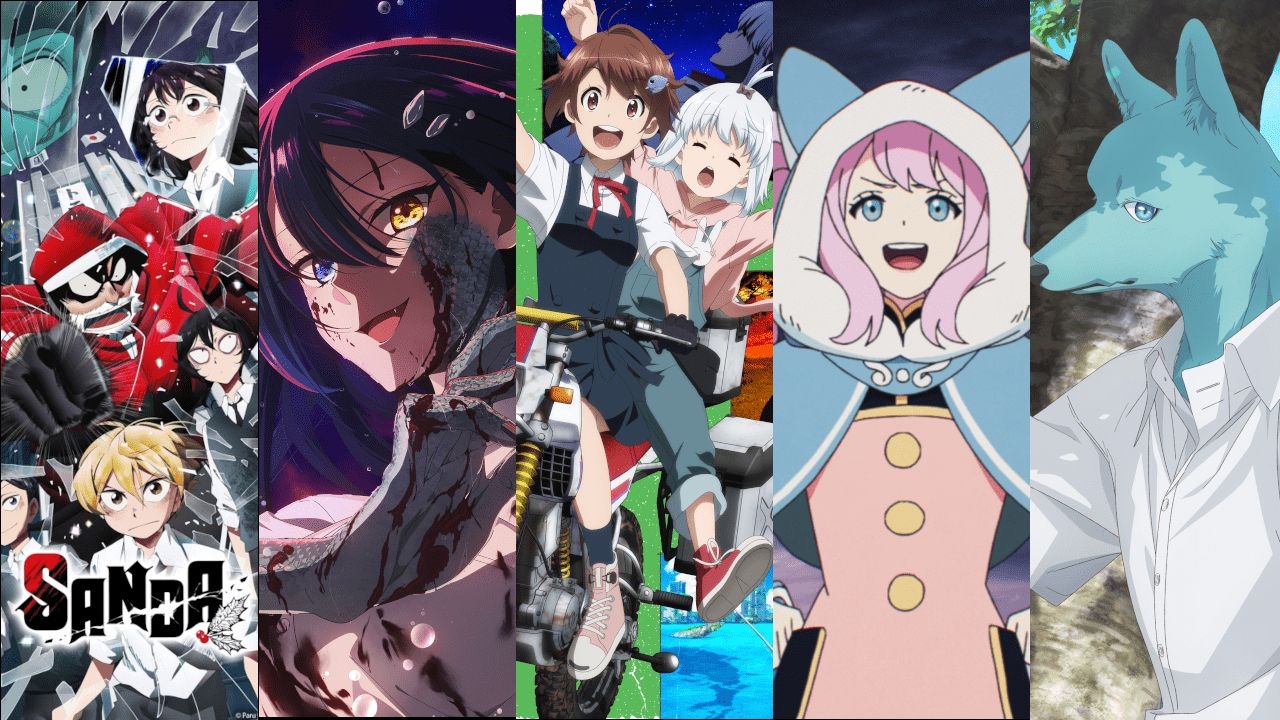
As the current TV season (October to December) draws near its close, I’m revisiting some shows I covered previously and trying two I missed before. Those two are This Monster Wants To Eat Me (spoiler: it’s good) and Touring After The Apocalypse. I also looked back at Sanda, Let’s Play and With You, Our Love Will Make It Through.
Sanda is streaming on Prime Video, the others on Crunchyroll.
All these series are based on comics, most of which are still running as of writing. (Future chapters of the Let’s Play comic will be published on the Tapas platform, according to the artist Mongie.) The Sanda manga by Paru Itakagi ended in 2024, but it fills 16 books.
That means it’s unlikely any of these series will have conclusive ends by the close of the current season. In theory, some of the anime might take the risky step of inventing their own endings, but that’s not a common practice, partly due to fan pushback. Otherwise, there’s the hope that some of these series will return eventually. I’d say Sanda has a good chance of coming back, but there’s no guarantee.
Fans have resigned themselves to TV anime having frequently inconclusive endings, so that viewers must switch to the source material if they want to carry on. Often that source is a manga, sometimes a series of so-called light novels. I don’t usually switch to the source myself, though I made an exception with The Flowers of Evil, a manga by Shuzo Oshima, because I was so annoyed by the anime’s broken-off ending. Oshima’s story will be retold as a live-action Japanese TV version in 2026.
I should add that the older TV anime I’ve recommended in this column tend to have strong endings. They include Monster, Dennoh-Coil, A Place Further Than The Universe, Haibane Renmei (“Grey Feather Federation”), Samurai Champloo and Summer Time Rendering.
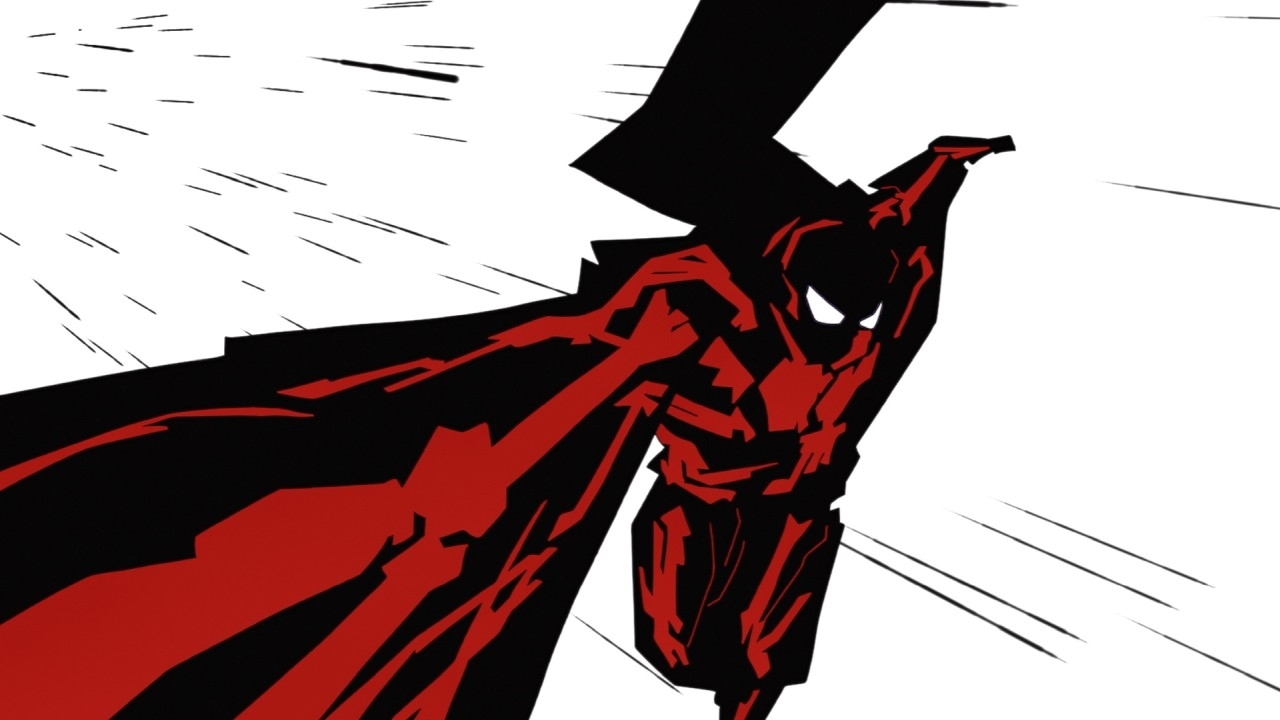
Sanda – In a recent episode of Science Saru’s Sanda, Santa Claus – the real deal, with a beefy physique and white beard – is in a school gym. He’s wearing only tracksuit pants, but if you think that’s revealing, he was stark naked a few episodes earlier, delivering an impassioned speech about love and tolerance to an audience of goggle-eyed teenagers.
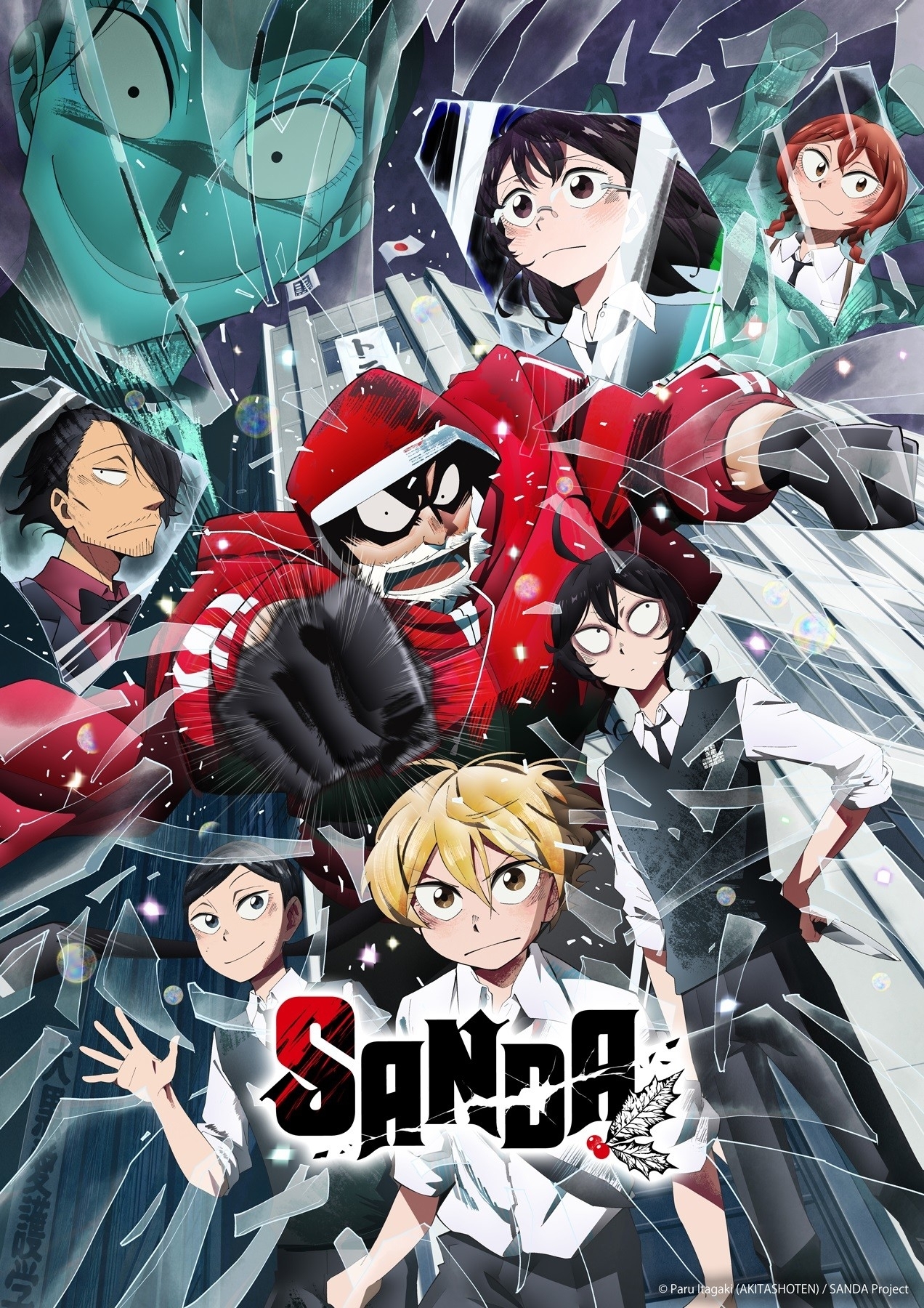 To add to the inappropriateness, Santa is imploring a 14 year-old boy in the gym to shoot him. The boy has never even held a gun before – for heaven’ sake, this is Japan. Luckily his P.E. teacher is a combat-hardened spy who resembles the gunman Jigen in the Lupin The Third franchise. The teacher impatiently guides the trembling student’s movements – pull the slide, chamber a round, take the proper posture – until the gun is aimed. The boy whimpers one last protest, and fires.
It’s a typical moment in Sanda these days, and that’s great. Back in October, I was impressed by the strong graphics and subversive ideas in the first two episodes, but unconvinced by their story and characters. Nine episodes on, though, it’s splendid. There are occasional awkward pauses or clumsy transitions, but Sanda’s soon back to being really good.
I won’t spoil the fast-accumulating shock developments and twists, though we’re getting a fast succession of new characters, young and old, and that’s a distinction which obsesses the series. These newcomers are interesting, individual and funny enough that you smile when the story loops back to each of them again. There’s a pint-sized, sharp-tongued curmudgeon whose fighting style takes you back to Yoda’s finest hour in Attack of the Clones. A girl character proves her mettle by disemboweling an adult; then she’s patted on the head by the gown-up she’s eviscerated.
There’s also a terrific plotline about an anguished same-sex couple, wrapped up ingeniously and tenderly with fears of change and growing up. More queasy is the supremely perverse dilemma faced by the titular hero, Sanda. Most of the time he’s a shrimpy 14-year-old schoolboy. However, it’s his fate to regularly turn into Santa, a superman who’s sworn to be the protector and hope to all children. Unfortunately, the boy-Sanda is developing feelings for a girl ally, the same age as himself… which freaks him out every time he turns into the adult Santa, and even when he’s in child form.
So far, the idea has been handled tolerably tastefully, though it’s one of those “only in anime” things. Surely no American hero story would dare be so squicky? Then again, there was the unspoken incest threat which underlay Back to the Future… On another note, I should repeat something I mentioned last time I covered Sanda. Its child-adult transformation feels like a gender-swapped nod to early “magic girl” anime shows, such as Creamy Mami (1984) and Osamu Tezuka’s Marvelous Melmo (1971). In them, young girls turn magically into older versions of themselves, decades before Hollywood’s Big.
Come to that, Big starred Tom Hanks, who also played Santa Claus in The Polar Express, by Back to the Future’s director Robert Zemeckis. Have we found a secret missing link? It would be no more deranged than the average Sanda episode.
This Monster Wants To Eat Me – You can laugh at the title, but it’s one to make you look twice, and more descriptive of its series than Sanda or Let’s Play. Though if I had the job of renaming the anime, I might go for Devouring Love. 11 episodes in, it’s a very good blend of melancholy teen psychodrama, yokai haunting, and gay romance. It’s set on Japan’s coast, with a lonely, traumatized teenage girl, Hinako, who looks on the waves by her home as if she longs to throw herself into them. In Episode 1, the sea seemingly responds. A monstrous woman rises from the depths, wraps Hinako in her hair, and drags her into the sea to consume her.
But Hinako is saved by a stranger, a girl with all the self-assurance Hinako lacks. This newcomer becomes a monster herself and shreds the predator in a torrent of blood and foam. “It was like a scene from hell itself,” Hinako says in soft voiceover, as if she considers herself unworthy to see such gory grandeur. Monster dispatched, the stranger introduces herself as Shiori, a mermaid who’ll protect Hinako from now on. Until, that is, Hinako grows to be as succulent as possible, at which point Shiori will eat her.
The series is intimate, moody and reflective, yet able to turn deft story twists and keep a steady, if stately, momentum. It resonates with many other anime, including the recent The Summer Hikaru Died. Like Hikaru, This Monster Wants To Eat Me starts where less ambitious scary tales would end, with the stranger revealing their monstrous nature.
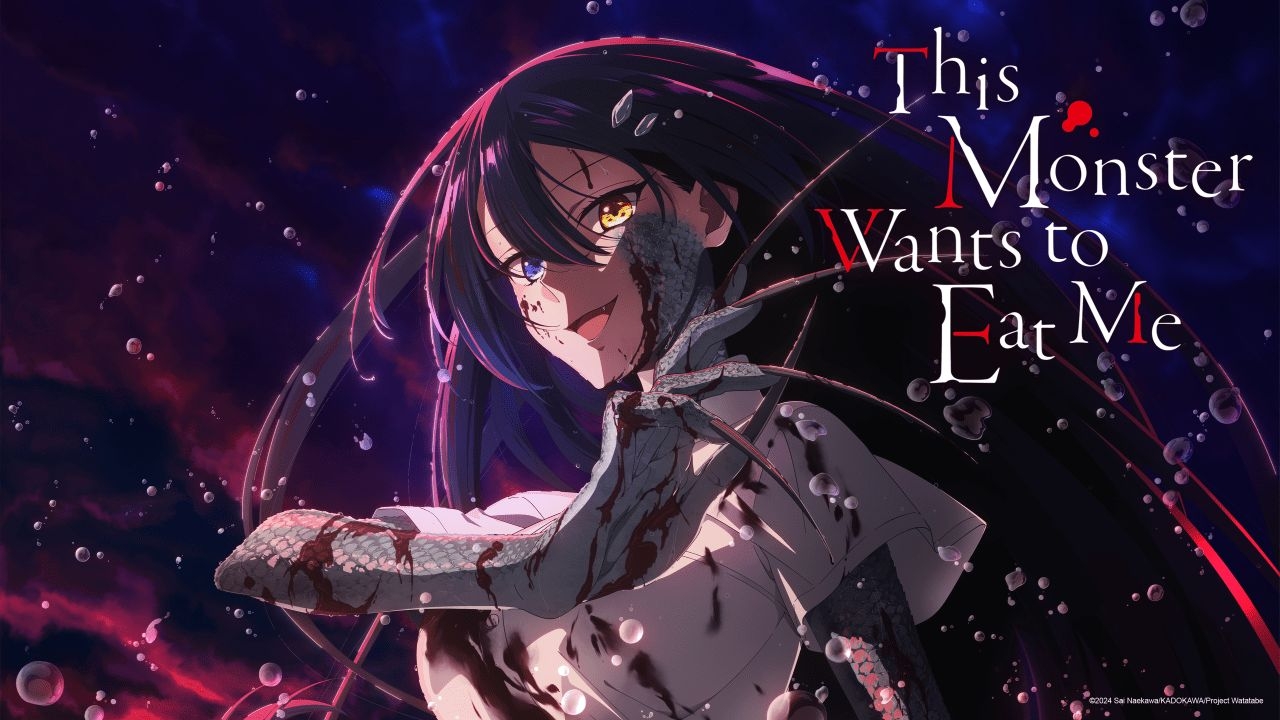
The miniseries Takopi’s Original Sin had a sad child encountering a cheery cartoon character, who was a horribly inappropriate intrusion into the child’s grim reality. Conversely, Shiori embodies Hinako’s death wish fantasies in beautiful, romantic form. This monster may be “bad,” but the series places us with Hinako, in awe and admiration.
Monster also has affinities with a gentler anime, Ghibli’s 2014 film When Marnie Was There, where another sad girl found an angelic friend in marshlands, perhaps a ghost or illusion. It’s strange how close Monster can feel to Marnie, with sequences such as Shiori tenderly listening as Hinako confesses her deepest pains, just the girls together on a summer night. Shiori assures Hinako she can still find joy… and that’s when, “I’ll devour you head to toe.”
The story could have easily been adapted in a lush style closer to Hikaru and Takopi. Instead, the series – animated by Studio Lings, which mostly provides below-the-line support for other studios – is presented with simple integrity. The motion is mostly simple, there are many static frames, and jokey intervals in the common style of girls’ manga – for instance, character interactions are shown through two cutesy disembodied heads, and written Japanese phrases blow through frames.
And it works fine, though the animation is plainly limited when giant fabulous monsters appear. The first three episodes especially lean on the principals’ voices and on the sadly soft ambient music, which is by Keiji Inai and recalls the work of Kensuke Ushio, composer for A Silent Voice and Chainsaw Man. As with Chainsaw Man – a subject of fan arguments about what its “correct” style should be – I don’t think there’s a single right way to show such a story. But Studio Lings has found one which makes its modesty a virtue.
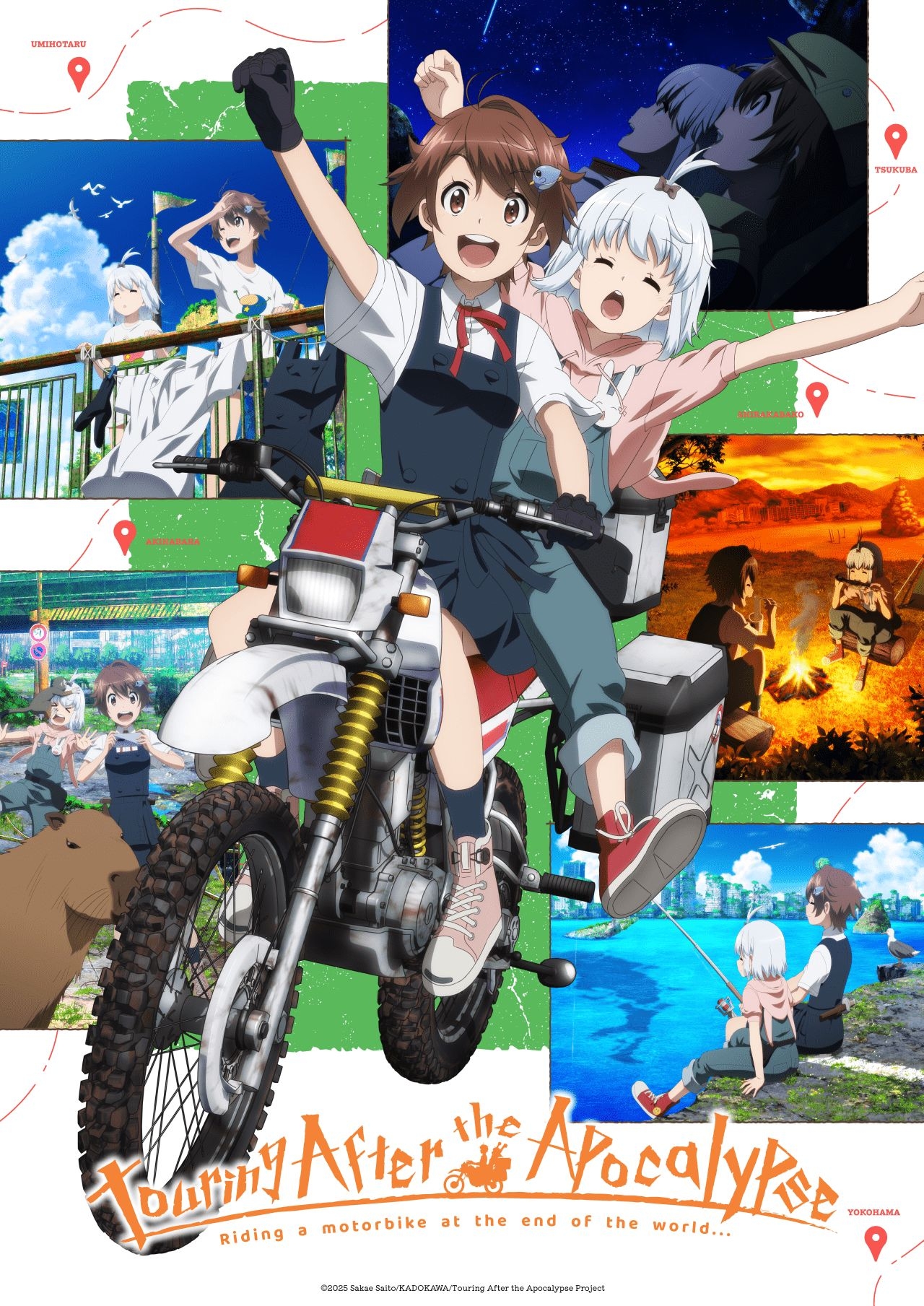
Touring After The Apocalypse – The name’s not as good as This Monster Wants to Eat Me, but again it’s a fair description of the content. Two cheerily upbeat girls, Youko and Airi, are on a journey on their shared motorbike, through a verdant Japan from which humanity has vanished. Skyscrapers resemble mossy tombstones, metropolitan districts have become jungles, and rising sea levels have submerged much of the country. Yet the girls are neither daunted nor depressed, enjoying their journey with a wholeheartedness only anime teenagers have.
 Depopulated Earths are a sci-fi staple. Viewers of Netflix’s anthology series Love, Death and Robots may remember two CG episodes tagged “Three Robots,” where the title trio traverse their own ruined world. Made around 2020, those episodes epitomized US adult animation from 15 years earlier, full of F-bombs, gallows humor and edgelord smugness. I quite like them.
Meanwhile, anime has presented post-apocalypse worlds with rousing songs and can-do optimism for decades. Perhaps the zenith was Future Boy Conan (trailer), a 1978 TV serial which was the first anime directed by Hayao Miyazaki. It starts with the end of civilization, then uses the green world which emerges as the stage for a thrilling children’s adventure.
The obvious precursor to Touring After the Apocalypse, though, was a 2017 TV anime called Girls’ Last Tour (trailer). That had another two girls traversing a mostly empty future world, though they rode a trundling tank rather than a motorbike. Despite the military vehicle, their tour was extraordinarily tranquil. The girls’ funny conversations were punctuated by glimpses of the sublime, like a temple of towering worm statues. The show was full of plain-spoken musings on life, death and carrying on, going from nowhere to nowhere, with traces of Waiting for Godot. Sadly, it’s not on streaming platforms, though home editions are available.
I’m enjoying Touring After the Apocalypse, but it doesn’t feel as special. The scenery is an asset –Apocalypse’s world is abundantly green and growing, in shot after quietly splendid shot, whereas Last Tour was often in tunnels or concrete wastelands. Apocalypse also has an unexpected emotional weapon – the songs the girls sing lustily, their words evoking a bustling society overlaid on humanity’s grave like a happy ghost.
The series has more obvious plot hooks than Last Tour. There are mysteries, including the whereabouts of Youko’s big sister, an intrepid explorer herself, who might only exist in Youko’s memories and dreams. There are a few action sequences, including a preposterously daft but fun chase involving an army of ravenous rats. I was more moved, though, by Episode 2’s story of a man briefly resurrected into the girls’ world. He speaks cheerfully and gently, but it’s plain his story is a horrific tragedy, poignantly touching the girls’ jolly adventure.
This is, of course, a “cute girls doing cute things” series, which viewers may find indulgent or creepy. When the girls reach the remains of Akihabara, the stomping ground for obsessive male fans, it makes a kind of character sense that the impetuous and girly Youko would force Airi into a maid costume and takes cute photos of her… except that any fan who knows about Akihabara culture will know the audience this scene is playing to.
But it’s still very likeable, as these shows often are. Youko and Airi may not have shown any depth, but they have a harmonious appeal together, conveyed in their ridiculously melodic voices. Despite the sardonic tag, “cute girls doing cute things” series can be wonderful, as shown by A Place Further Than The Universe which I covered previously in this column. Touring After the Apocalypse is nowhere near as good, but it is good in a similar way.
The series is animated by Nexus, another studio which largely does below-the-line work, though I enjoyed its 2019 series Granbelm, a combination of magic girls and robot suits that’s on Crunchyroll.
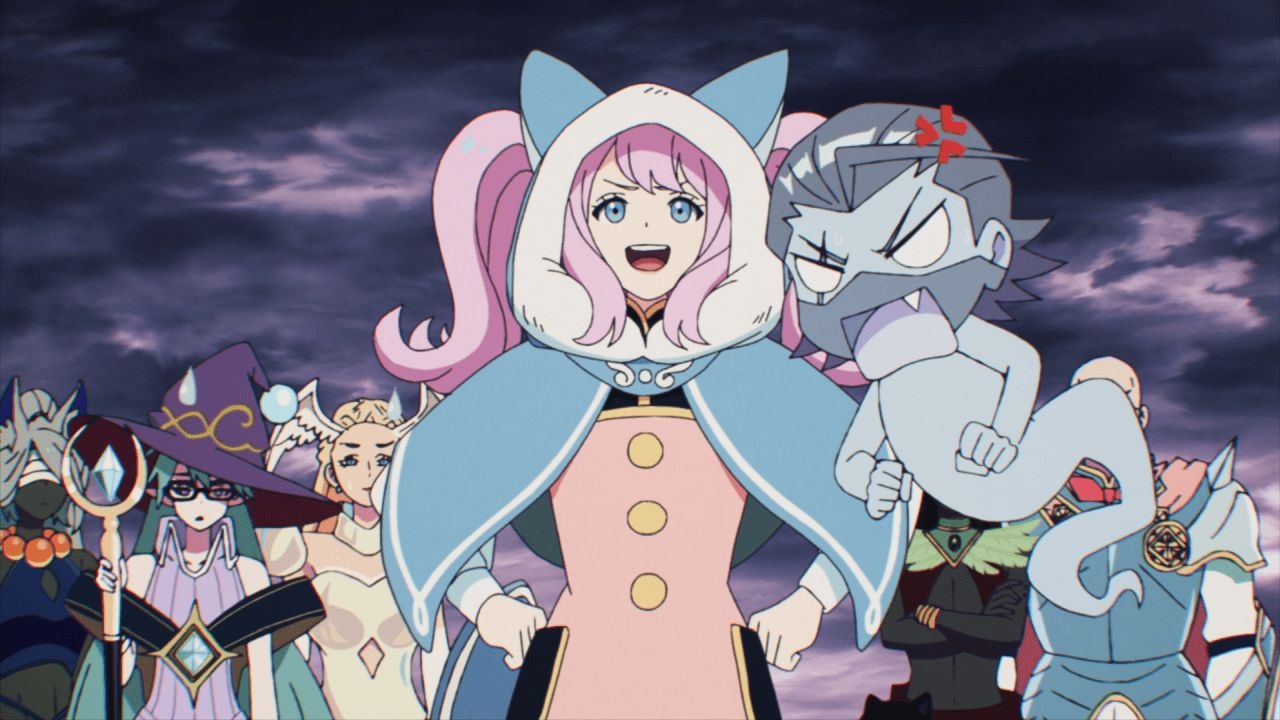
Let’s Play – Reviewing the first three Let’s Play episodes in October, I acknowledged the series was often crassly unsubtle, but its highlights kept me watching. Eight episodes on, my support has waned; if I wasn’t watching as a reviewer, I would have dropped it by now. And yet, it has periodically interesting things and good scenes, even if there seems only one possible end to the story.
In recent episodes, our heroine Sam gets gradually closer to Marshall Law, the boyish online streamer who carelessly trashed Sam’s indie game in Episode 1. Unsurprisingly, she’s also set up with rival potential love interests. Meanwhile, there’s more development concerning Sam’s “real” office job, at the company helmed by her doting dad. We learn her situation has parallels with Marshall’s, whose name IRL turns out to be Ben.
Highlights include more than one “Should we go further?” scene where the characters are grown-ups rather than terrified teenagers. Rare in anime, the scenes play with pleasing delicacy. There’s also a funny subplot about Sam determinedly refusing to accept money from Marshall (aka Ben) as an apology for snubbing her game. And in what feels like a corporate My Fair Lady, Sam’s office boss Charles tries to raise her self-esteem and dress sense. Impressively, this subplot feels touching, rather than horribly patronizing.
It also turns out one of Sam’s female friends has a backstory of domestic abuse, which is handled tactfully, and with the satisfying detail that the abuser wasn’t just punished by the law. (I didn’t expect a reference to a burst testicle.) The victimized woman is one of several characters who picture themselves as a series of puppet-like figures, representing their emotions like a more abstract and adult Inside Out. Even in rudimentary animation, it makes the show more interesting visually; so do the scenes of Marshall in a fantasy RPG world when he finally dares go back to Sam’s maligned game.
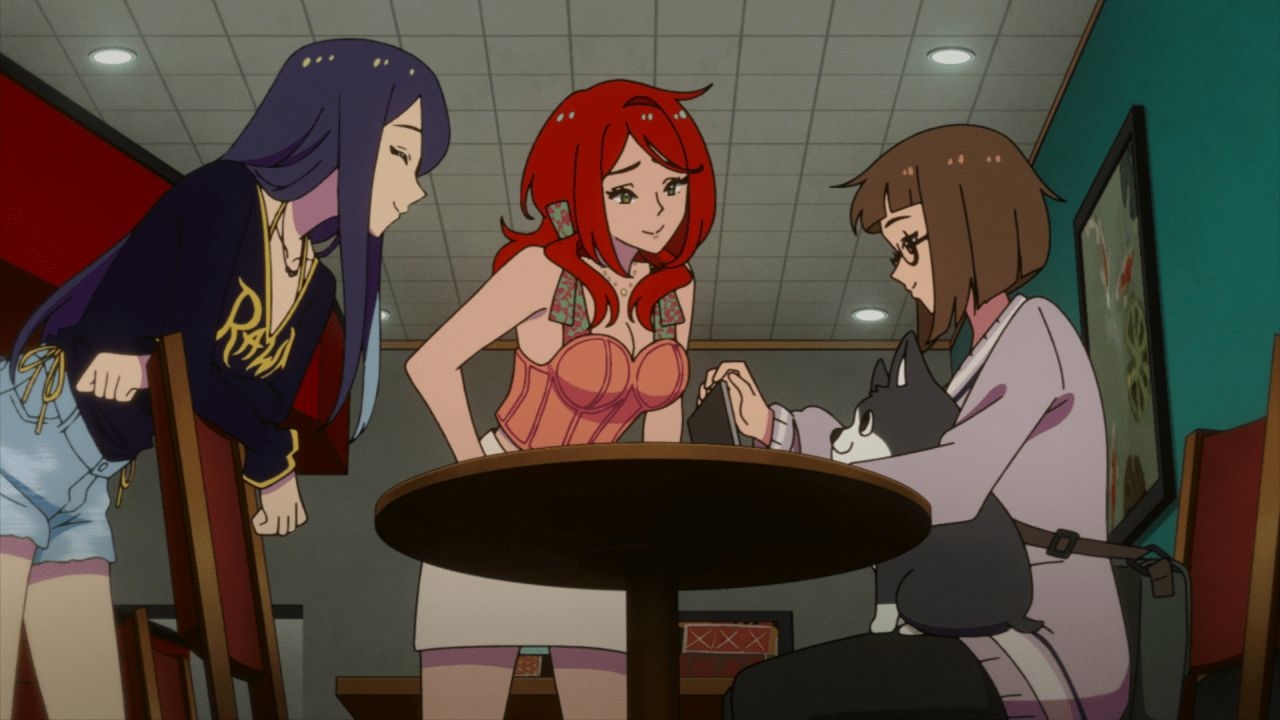
The big problem is the often-plodding narrative, without enough “animation” to stave off tedium. Last weekend’s episode had some decent payoffs, but some other recent episodes have been so bland that they were hard to sit through. The show’s also weirdly placeless. Without some incidental dialogue, I wouldn’t know if the setting was meant to be in Japan, America or somewhere else, with the action mostly taking place in generic offices, apartments and cafes. (It’s meant to be America.)
The series is animated by OLM, whose multiple production units have made such wide-ranging anime as Pokémon, the first (1997) Berserk series, The Apothecary Diaries, Summer Time Rending and an excellent show I highlighted last week, Baku Kinoshita’s Odd Taxi.
With You, Our Love Will Make It Through – In recent days, I’ve become aware (heaven help me) of the frenzied fan discourse over Disney’s Zootopia [Zootroplis for some] films, and whether their fox and rabbit leads are a romantic couple. Meanwhile, over in anime, human girl Mari and wolf boy Tsunagu struggle to keep their hands off each other. Quick, a crossover fanfic!
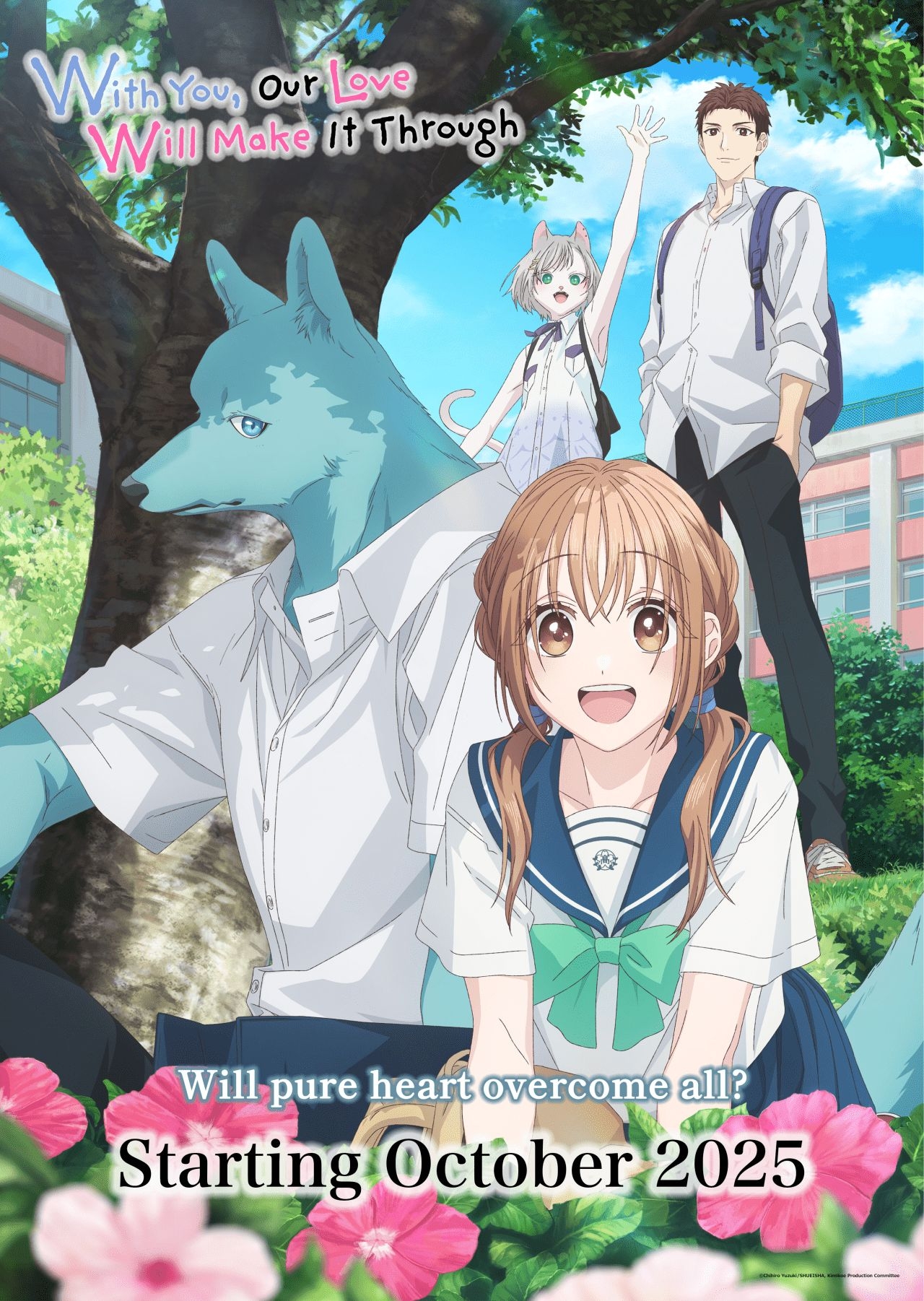 In honesty, much of the time I find With You… quite dull (and there are some anime teen romances I love). What I still find intriguing, though, is the clash between the shy chasteness of most of the show and the moments where the characters threaten to lose control, often heralded by Tsunagu’s throaty growl. Animated by the Millepensee studio, With You… isn’t a sexy comedy like My Dress-Up Darling. Rather, it’s a wide-eyed fantasy where burgeoning, glorious young love is inseparable from the fear of going too far, of making a terrible mistake. What’s also interesting is how these emotions are consistently shown from both the boy’s and the girl’s sides, despite only one of the couple being human.
I’m okay with the lovers. I even like the idea of the boy Yukihiro, the show’s virtuous third-wheel character, who’s torn between his own desire for Mari and his genuine friendship for both her and Tsunagu. But Yukihiro is also annoyingly cutesy, and the show badly needs a better, funnier supporting cast to play off the main trio. Or else some interesting lore. But, we’ve still learned next to nothing about the “Beastfolk,” and how their existence is viewed by the wider world. Instead, there are tiresome scenes of basketball games and three-legged races, where the animation’s obvious limits reflect how much better the series could be.
By the way, a human woman and a furry werewolf happily consummated their relationship in a PG-rated anime film, Mamoru Hosoda’s The Wolf Children. And for Zootopia fans seeking cross-species romances, I’d refer them to the excellent Beastars on Netflix, whose star-crossed furries are a rabbit and a wolf. It’s from a strip by Paru Itagaki, who now writes the Sanda manga, which is where we came in.