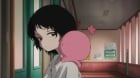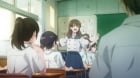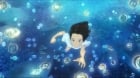
Columnist Andrew Osmond talks to the director about his 2 acclaimed anime, the TV series ‘Odd Taxi’ and his new film, ‘The Last Blossom.’
With the release of Disney’s Zootopia 2 (which I enjoyed but found a clear notch down from the original), it’s an apt time to feature an anime director who’s also depicted a world of talking animals. He’s Baku Kinoshita, who directed the 2021 TV series Odd Taxi and this year’s cinema film The Last Blossom, both very distinctive pieces of anime.
I interviewed Kinoshita in November while he was visiting Britain to attend the Manchester Animation Festival and the Edinburgh part of Scotland Loves Animation. (My thanks to Anime Limited and especially the wonderful Kerry Kasim for making the interview possible, and to Bethan Jones for tireless interpreting.) If you just want the interview, then scroll further down.
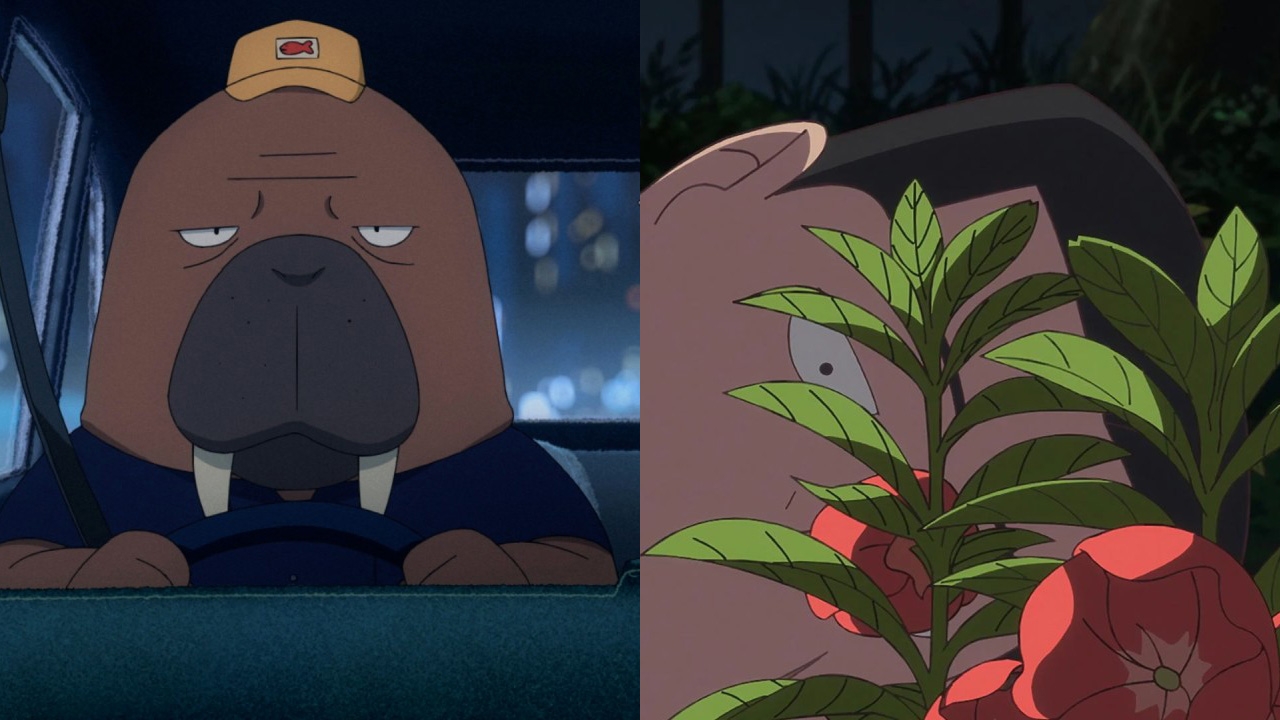
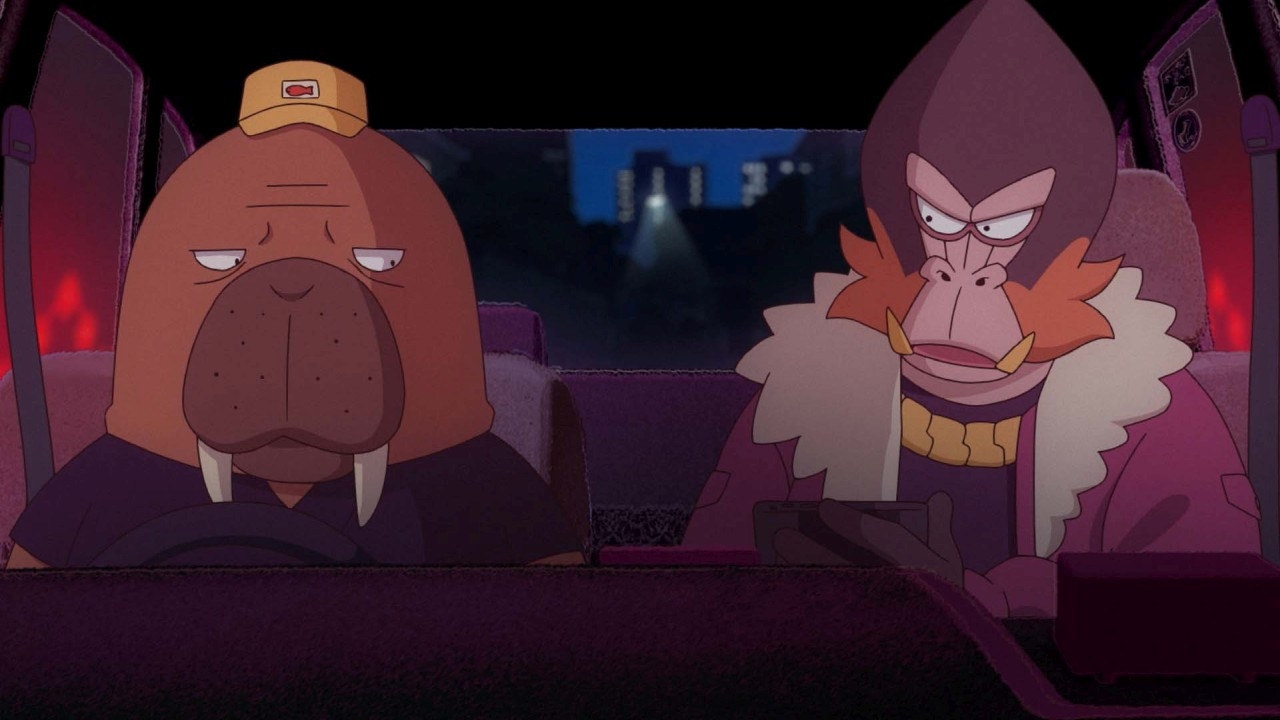
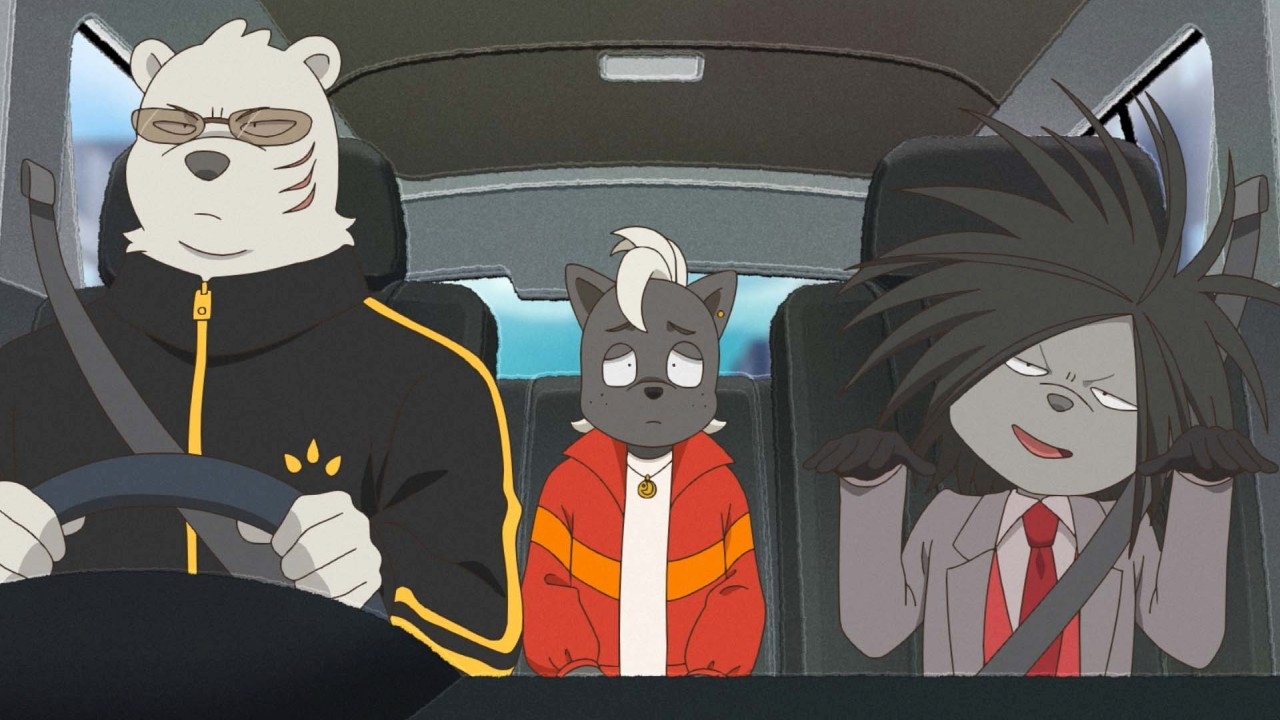
To clarify, it’s Odd Taxi that’s in a world of talking animals, though with a very different mood and tempo from Zootopia 2. Odd Taxi is a slow-burn mix of character comedy and mystery drama. The focal character is a walrus – you may be thinking of Zootopia 2 again, but he’s not a funny walrus. He’s a world-weary taxi driver in an animal version of Tokyo, reliable and sardonic and single, named Odakawa.
All this walrus wants is a quiet life. Yet over the 13-part series, Odakawa is drawn into a web of mysteries, involving criminals, cover-ups, idol singers, struggling comedians, deranged gamers, kidnap, murder and the strangest rapper imaginable. You can stream the series on Crunchyroll, which has also released it on Blu-ray. (The series ends on a sudden cliffhanger, but it’s addressed in the closing minutes of the film Odd Taxi: Into the Woods, which is largely an abridgement of the show; it’s also on Crunchyroll.)
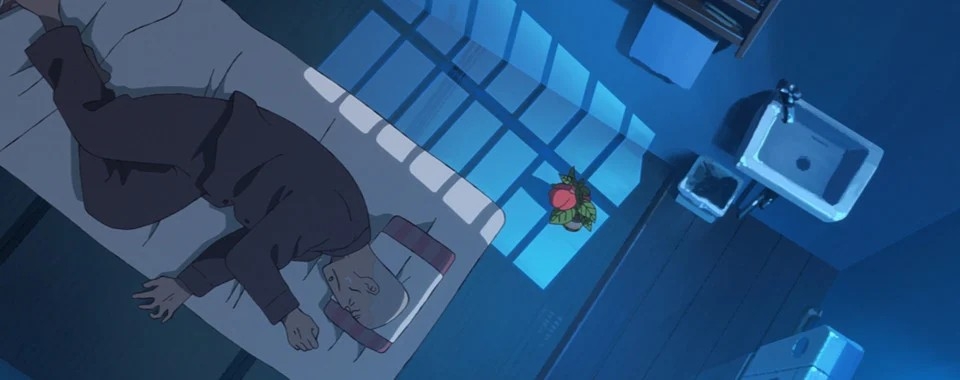
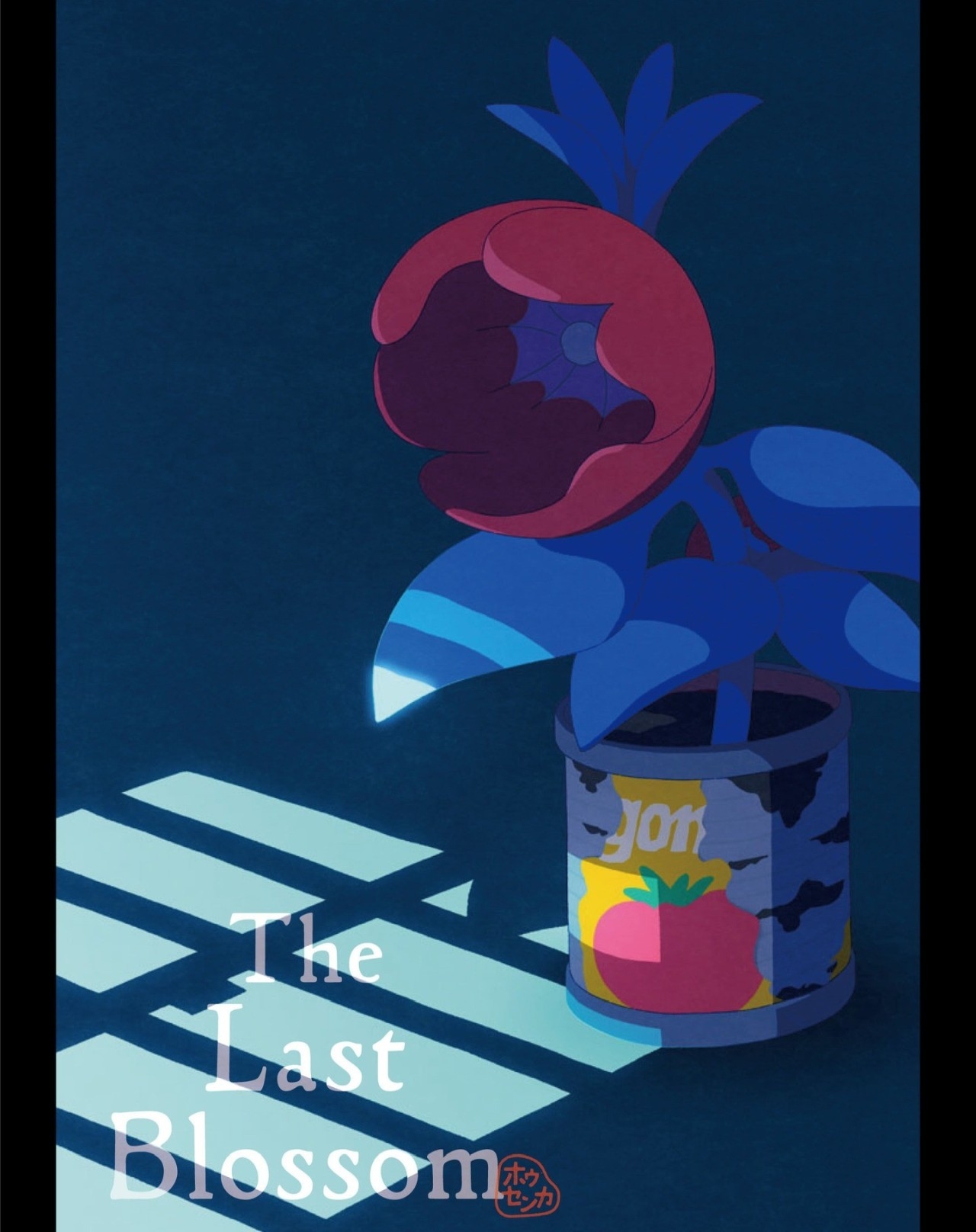
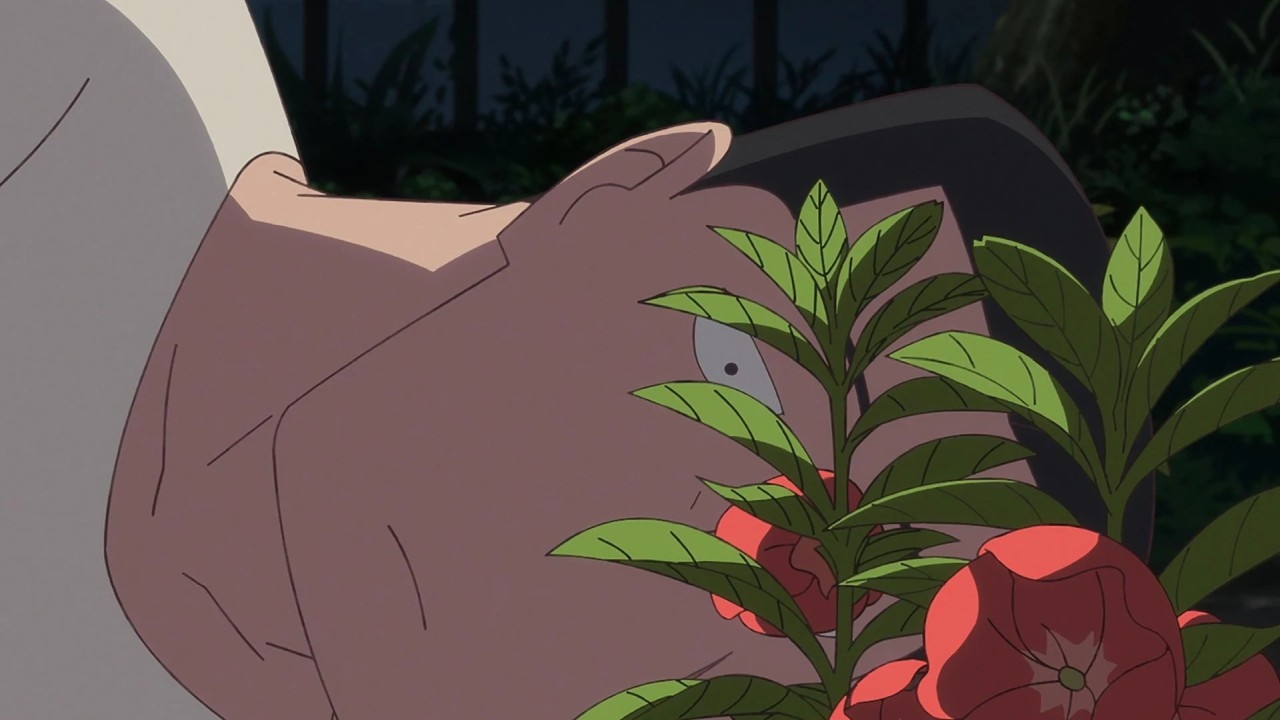
Kinoshita’s new film The Last Blossom is set in the human world, though there are links to Odd Taxi which I ask about in the interview. (One link is that Kinoshita worked on both titles with the same writer, Kazuya Kinomoto.) Told in flashback, Blossom is framed as the memories of an elderly convict, Akutsu, alone in his prison cell… or almost alone, as he tends a flower which talks to him. Together man and flower recall the Japan of the 1980s, when Akutsu was a member of a yakuza gang, though he also had a home with a woman and a child. But then his family and criminal lives collide explosively…
The Last Blossom was inspired by the live-action Japanese films by Takeshi Kitano. They often involve yakuza, though Kinoshita himself has highlighted a non-yakuza Kitano film, 1991’s A Scene at the Sea. An American release of The Last Blossom is yet to be confirmed, but it seems certain in some form. So far, the film has already played at Annecy and Manchester Animation Festival and it was shown in Edinburgh, Glasgow and London during the Scotland Loves Anime festival. At the latter, it had a two-for-two win, being awarded both the festival’s judges and audience prizes as the best film in competition.
Odd Taxi was animated by OLM Inc., which also animates Pokémon. The Last Blossom was animated by the CLAP studio, which animated the films The Tunnel to Summer, The Exit of Goodbyes and Pompo the Cinephile.
Andrew Osmond: You’ve mentioned that you love the film Taxi Driver. I wondered what animal you think the Robert De Niro character, Travis Bickle, would be.
Baku Kinoshita: (Thinks) A buffalo.
AO: Given that Odd Taxi is an adult drama with animal characters, have you ever seen the American animated series, BoJack Horseman, and if so, did you like it?
BK: I have seen it; not all of it, but it’s good.
AO: Dialogue is very important in your anime. Many of your dialogue scenes are between pairs of characters who have a strong connection, be it romantic, professional or as friends. Why do you have this preference for these kinds of scenes?
BK: I worked with the same script writer [on The Last Blossom] as I did on Odd Taxi. I really like Episode 4 of Odd Taxi, when you get the narration from the character of Tanaka [a supporting character in the series.] I love the technique that the scriptwriter Kazuya Konomoto uses of driving the plot forward through conversation. Because I was working with him again on this, we wanted to have this talkative character at the center of the story, who could then drive the plot forward through conversation.
 AO: Foreign viewers like me can be at a disadvantage when they’re listening to voices in Japanese. I wondered if you could describe the voices you wanted from two of your lead actors: Pierre Taki, who’s the voice of the plant in The Last Blossom, and Natsuki Hanae, who voices Odokawa in Odd Taxi. I found them both very interesting, but I wondered if I was missing some context.
BK: With The Last Blossom, the flower is a character who has been alive for more than 100 years, and I wanted him to have wisdom beyond that of humans. Pierre Taki is a musician; he also has played all sorts of roles as an actor, and what I found appealing about him is you don’t always know what he’s thinking. And I thought that he had the right kind of mysterious depth to play the flower, and that's why I offered the role to him.
With Odokawa, the character himself is fairly young. He’s about 40, I think, and he does have a dry voice. But also I wanted it to have an element of freshness to it. And I thought that Natsuki Hanae was the right voice.
AO: Some anime directors say they try to stay away from “typical” anime voices. In Odd Taxi, several of the actors have a lot of anime experience. [For example, Odokawa is voiced by Natsuki Hanae, whose many other anime roles include the hero Tanjiro in Demon Slayer.] However, the main actors in The Last Blossom don’t have much prior anime experience. Were you trying to stay away from typical anime voices?
BK: That wasn’t the reason for using those actors in The Last Blossom. In this case, the film is quite similar to Japanese live-action in the editing, in the story, in the tempo. And that’s why I decided to approach actors from the world of Japanese live-action.
AO: In design terms, both Odokawa in Odd Taxi and Akutsu in The Last Blossom have big, heavy, even oversized faces. What do you think are the advantages of this kind of face?
BK: Odokawa is based on a walrus so yes, he has a big face. Akutsu is tall for an anime character; not exceptionally so, but he is a taller character. I think the advantage of bigger characters is that they’re easier to animate. So Odokawa and Akutsu would have been a bit easier for the animators to work with.
AO: In both your anime, the biological relationships between characters often seem less important than the relationships that the characters find for themselves. Does this reflect a personal belief that you have?
BK: Both of these stories, I wrote together with Konomoto. And there are elements of both of us reflected in the films, but in terms of having more emphasis on the people around you, rather than blood ties, I think that comes from Konomoto in both cases.
AO: Both Odd Taxi and The Last Blossom are to some extent crime stories. Do you think that reflects your own preference for crime stories, or your interest in the kinds of people who become involved in crime?
BK: It’s because I like crime stories. I enjoy showing characters living in the underbelly of society. And I’m not trying to justify them, but in the sense that they aren’t guaranteed a future, I find a kind of ephemeral beauty in that.
AO: I thought both of your anime had an optimistic direction, in that some characters or situations that seemed doomed or hopeless at the start are shown in a more positive way by the end. Would you describe yourself as an optimist?
BK: I’m a realist, but because I’m a realist, I feel like I need to make stories that give people hope. I think we all need to enjoy ourselves, and I feel it’s my role to bring hope to people.
AO: Odokawa in Odd Taxi is quite mysterious; for quite some way, the audience is wondering whether he’s a murderer. In The Last Blossom, some basic facts about the main character were revealed quite early; for example, his deep feelings for Nana [the woman he lives with]. I wondered why you decided to reveal more about the protagonists early on this time.
BK: The Last Blossom wasn’t intended to be a mystery. This was intended to be human drama, to depict the rise and fall of one man. And so I think it’s a vector change from mystery to human drama.
AO: Did you think there was any risk in the way that The Last Blossom’s story is shown as a flashback? I admit that when I started watching it, I was thinking this was going to be an entirely downbeat story, showing one character’s failures until a terrible end, like Grave of the Fireflies. The film turns out to be not that. But were you worried about your audience feeling less involved in the action, because they think they know how it turns out?
BK: Yes, there is a risk of people getting that wrong, thinking they’re watching a different kind of film. But actually, I think it’s good that they're being misled in a good way. Because they start off thinking it’s going to be a dark story all the way through, and actually the ending is quite hopeful and uplifting. So, you’re taking them through something dark, but then giving hope, which I think is a nice way to do it.
AO: The Last Blossom is largely set during Japan’s so called “bubble” years in the 1980s. For the benefit of foreign viewers, how do you see this time?
BK: The bubble was a time of great success. Everyone was doing well, but then when it burst, everything collapsed. And I wanted to juxtapose that with the life of one man, one man's rise and fall, and I think of it as a time of ephemeral beauty.
[Warning! The final question is about the end of the Odd Taxi TV series, though I’ll minimize spoilers.]
AO: Regarding the twist in Odd Taxi’s last episode, was it something that you decided upon very early when you were developing the series, or was it decided later in the creative process?
BK: I knew the ending from the beginning in terms of the main character, but we hadn’t decided that we were going to bring all of the characters together at the end. That was something the script writer added. [Regarding the episode’s biggest reveal.] That was there from the beginning. It was something that the screenwriter and I came up with between us, and we knew from the first episode that that was the case.