Disturbing content ahead! Columnist Andrew Osmond considers a just-ended Crunchyroll miniseries from ENSHIYA studio about grade-school bullying, horrific cruelty and a twee tentacled alien.

Tokyo’s having a heatwave, with many folks on the streets wielding parasols or mini-fans. Japan’s summers are oppressive at the best of times, which may be why horror anime are often set in merciless sunlight. I’ve previously covered Summer Time Rendering in this column, and more recently The Summer Hikaru Died, now streaming on Netflix. This week I’m looking at the just-ended Takopi’s Original Sin on Crunchyroll, which is emphatically not for everyone.
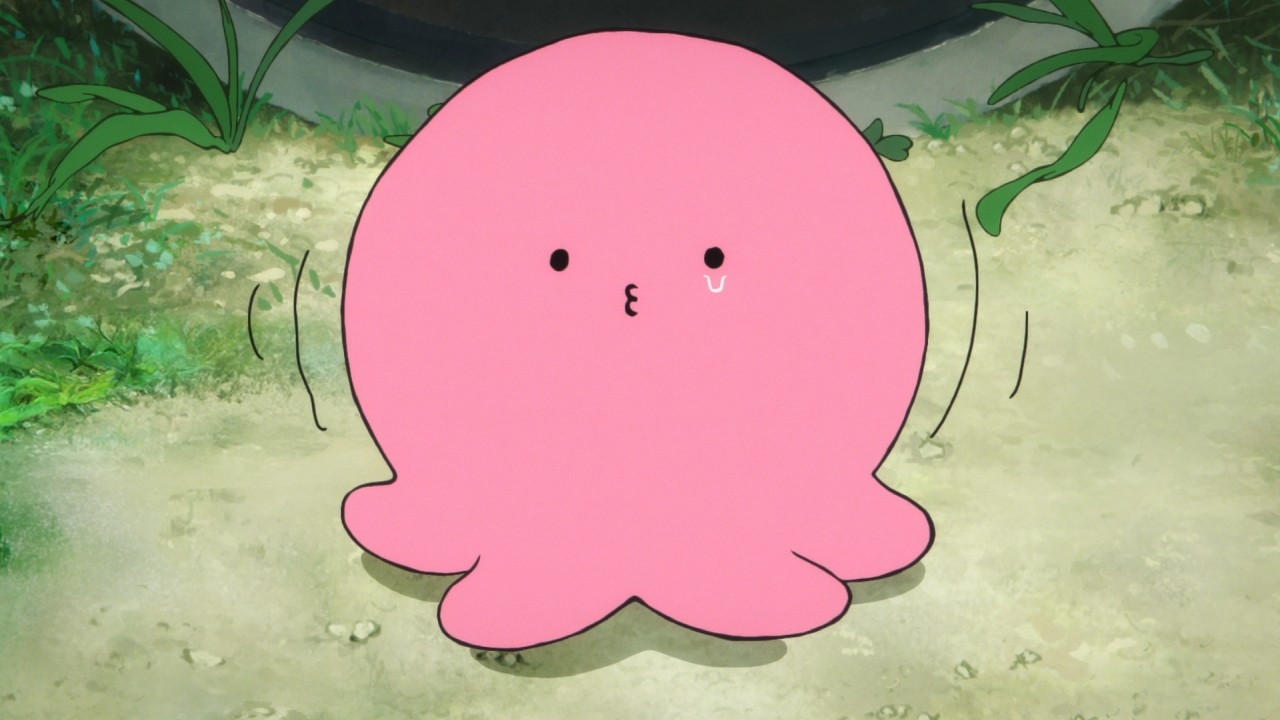
Indeed, Takopi opens with a content warning to let you know it’ll be tough. It’s about small kids, violence, and bullying, and some of the worst things to come out of violence and bullying. It’s also framed, with horrid humor, like a preteen fantasy cartoon. Takopi is a cheery cartoon squid that’s come to play with the kids and make them happy. By the end of the series, the tentacular hero will be schooled in human nature, the lessons beaten in hard.
I’m partly covering it because it’s just ended – the story’s only six episodes long (Episode 1 is extended), from a similarly short strip by the pseudonymous artist Taizan 5. But I’m also covering it because it exemplifies a tendency of anime that I discussed some months ago – how anime blurs the lines between family and adult animation to befuddle unwary foreigners.
Let’s be clear, this is adult animation. (Crunchyroll has rated Takopi “16+,” while in Japan, the series is streamed on Netflix rated “18+.”) But it pastiches the tropes of family series, and not just for the edgelord lulz of a Robot Chicken sketch or Family Guy cutaway. In my previous article, I cited the anime Puella Magi Madoka Madoka and Made in Abyss: “They often feel like revved-up versions of family shows, with much the same eager, adventurous heroes battling monstrous adults. It’s just that the perils and traumas facing the kids can be so much more terrible, bloody and soul-destroying.”
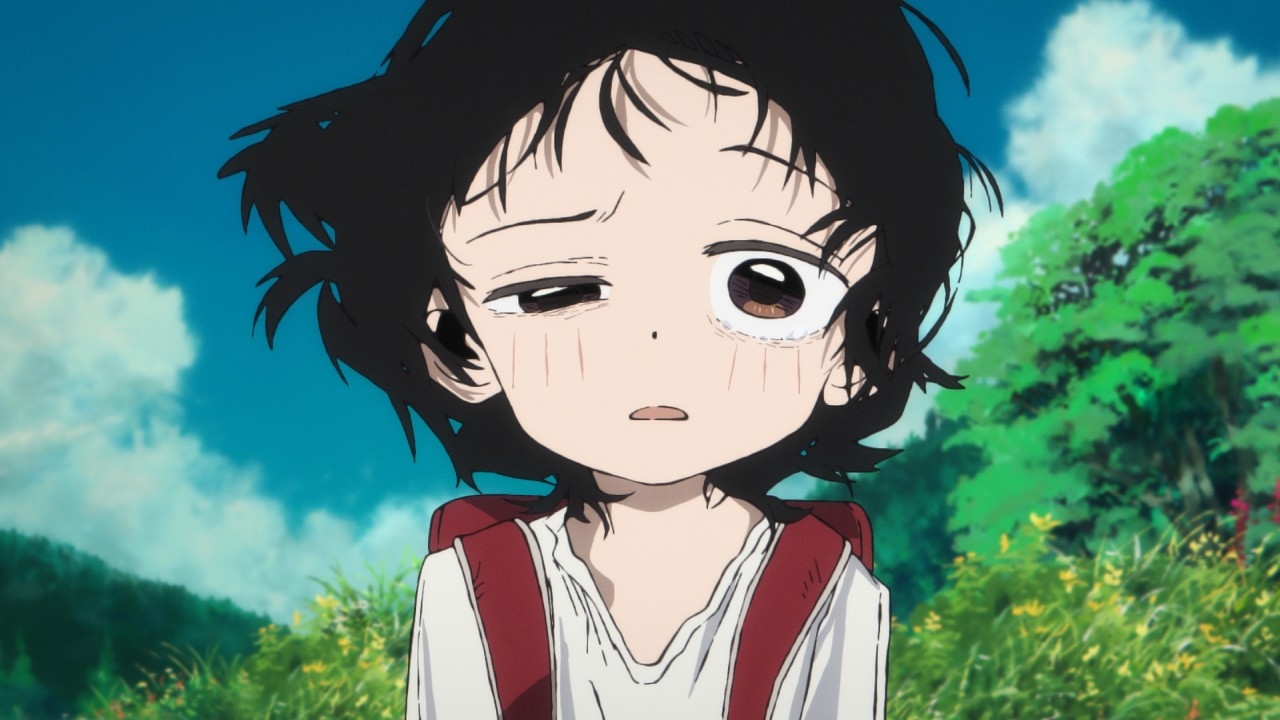
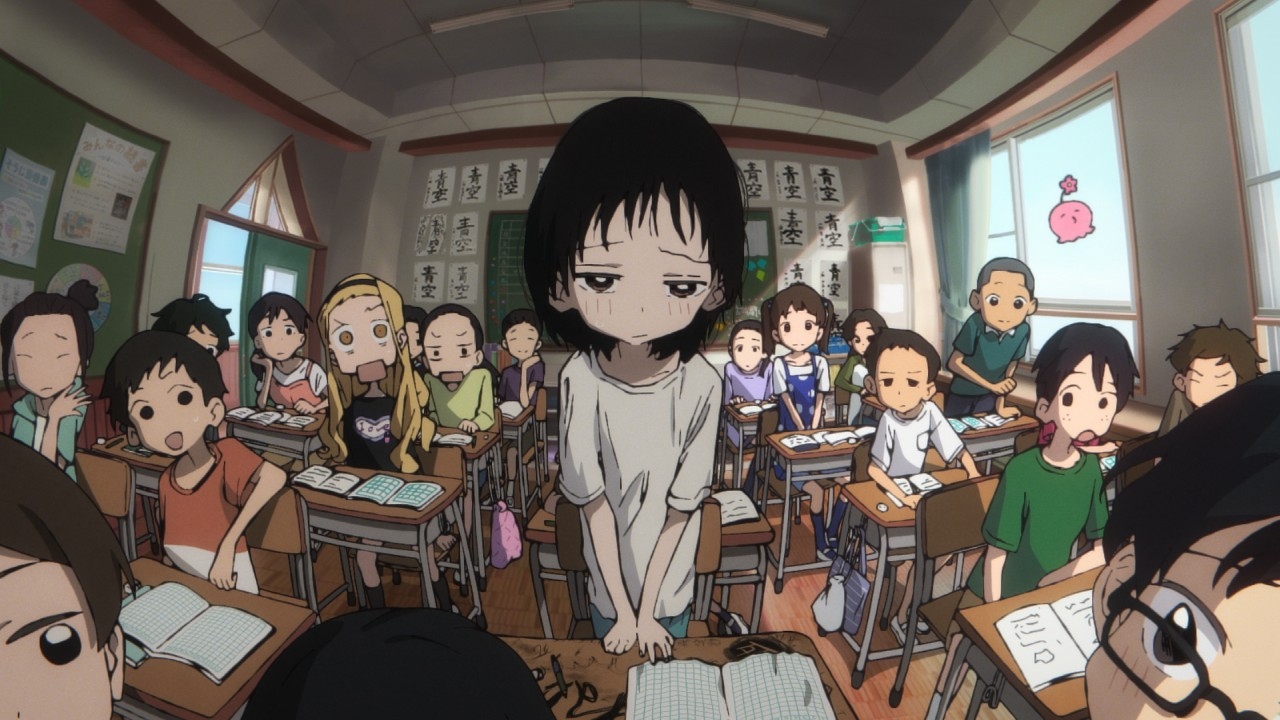
In Takopi, though, the only eager, adventurous character is the titular squid-alien (who’s named for his resemblance to an octopus, “Tako”). The kids are miserable and worn down, including Shizuka, a solitary girl who finds Takopi in a concrete pipe. She’s unimpressed by his existence, his chatter, or the gadgets and gizmos he offers. “No thanks,” she says, wandering off. She’s already decided there’s no magic in the world, just meanness and disappointment.
Shizuka is one of a dysfunctional triangle of kids in this story. The other two are in Shizuka’s grade school class. There’s Marina, a far more popular girl, who bullies Shizuka violently and remorselessly, and there’s Naoki, a shy boy who’s sympathetic to Shizuka but who seems helpless to intervene. Both he and Marina have their own abusive backgrounds. Their world is shown through rich, vibrant linework that only seems the more perverse when it depicts appalling things, like Marnia giving her victim an extended beating behind school… and we’ve seen worse by then.
Of course, one of the show’s bitter “jokes” is the utter mismatch between the twee, cheery Takopi and the vile situations he finds himself in. Other pundits have noted Takopi has obvious analogies with one of Japan’s most famous cartoon characters, Doraemon, a robot cat who similarly brims with gadgets and cheer. The whole set-up could be the set-up for a Family Guy-style sketch, a skewering of sappiness.
But if Takopi was just piled-on meanness, it would be much less interesting than it is. As I’ve said before in this column, anime differs from much American adult animation in that it makes you care for characters without mocking you for caring. Instead, you’re always hoping the story can find some uplift or redemption, as impossible as that seems in Takopi’s case.
I won’t spoil much about the story, except that it’s one of many anime to reflect on the power of imagined things – even silly things like Takopi, so goofily simplistic beside the beautifully-drawn humans. (Perhaps a better analog for Takopi would be that most hated of American kids’ icons, Barney the Dinosaur.) Other morals are clear by Takopi’s last part, and its ending is considered enough to resonate back through the six episodes leading to it. Incidentally, the ending has a crucial post-credits scene – like the MCU, anime expects you to wait until the very end.
Some story developments will feel familiar to many anime fans. A few of Takopi’s story points feel clumsy or muddled, which will also feel familiar to anime fans. Its bigger issue, though, may be its morbid selling point. Takopi is truly nasty at times, and some viewers may not make it through Episode 1. Netflix series often don’t get home releases, but there’s at least one scene in Takopi that might block the series from getting past Britain’s BBFC regulator, at least without big cuts. Given anime’s reputation, I should say it’s nothing sexual, but it’s still shocking to see the story go there so brazenly.
Another objection that some viewers might make is that some aspects of the story seem luridly overblown and unlikely, particularly when it comes to the children’s torments. For instance, in the series, Marina’s dad is cheating on her mum, which a grade schooler might be aware of. However, it’s somewhat less plausible that she knows he’s cheating with an escort worker who just happens to be Shizuka’s mum.
But I could accept these excesses in an anime context. Beyond anime, Takopi’s depictions of the cruelties of children and adults also put me in mind of the writings of Britain’s Roald Dahl. Indeed, one thing that I thought of while watching Takopi was “The Swan,” a brutal story of bullying by Dahl. It was too intense for any of his children’s books, yet it feels related intimately to his children's fiction – the same relationship that you so often see in anime. (“The Swan” was made into an extremely stylized short film by Wes Anderson that’s on Netflix; I’m still not sure if I like it.)
In anime, the subject of grade school bullying was somehow made into a poetic character study in Naoko Yamada’s film A Silent Voice. Meanwhile, some of Takopi’s other story elements recall a superb TV series from last year, the apocalyptic Dededede.
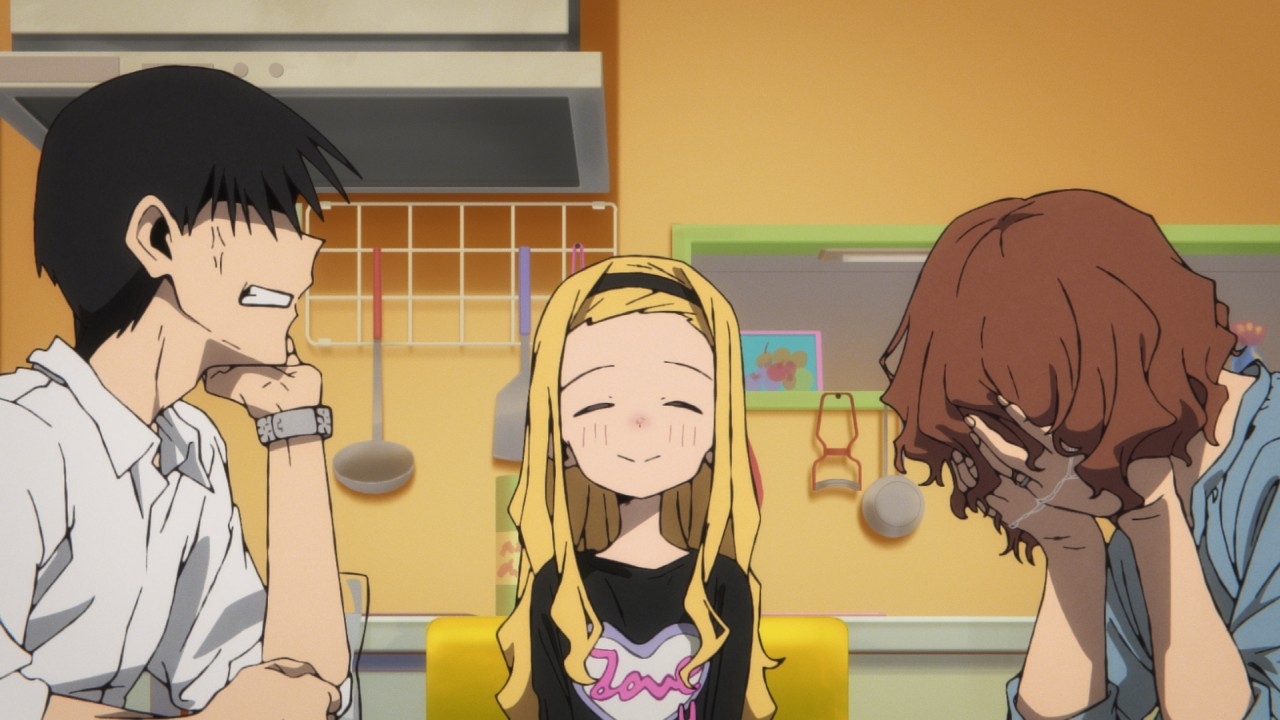
Takopi was animated by the ENISHYA studio, which seems to have done largely below-the-line work until now, and it was directed and adapted by Shinya Inno, who helmed the first season of the epic Dr. Stone. That’s a far more populist series than Takopi, but I don’t think it’s wholly different. Dr. Stone starts with the world ending, every human becoming a statue, and one petrified boy staying conscious for millennia, just because he wants to tell a girl he likes her. It’s a ludicrous sketch-show joke played straight, like Takopi. The difference, though, is that Takopi’s joke is so twisted it’s terrifying.