What can the creator of ‘Spirited Away’ and ‘My Neighbor Totoro’ have in common with the author of ‘Watchmen’ and ‘From Hell?’ A great deal, argues Andrew Osmond.
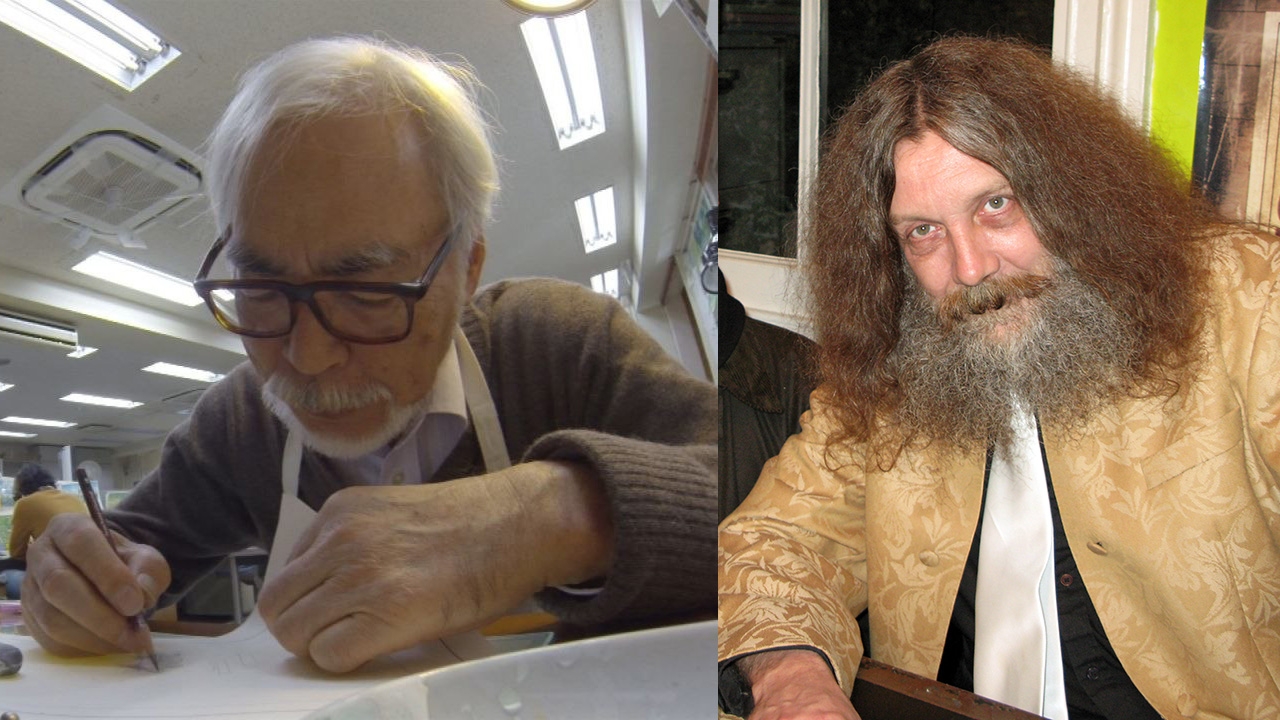
They’re world-famous practitioners of pictorial media. They started out laboring in once despised sub-cultures, then rose to become full-blown artists with establishment respect. And until quite recently, they both had really impressive facial hair. Alan Moore’s magnificent bristle evokes a shaggy primeval forest, housing a Paleolithic shaman from Northampton or a bouncing bellowing Totoro, or both. Hayao Miyazaki preferred to keep his beard neatly trimmed, though this March the shock news broke that he’d shaved it off, saying it was too much “hassle.”
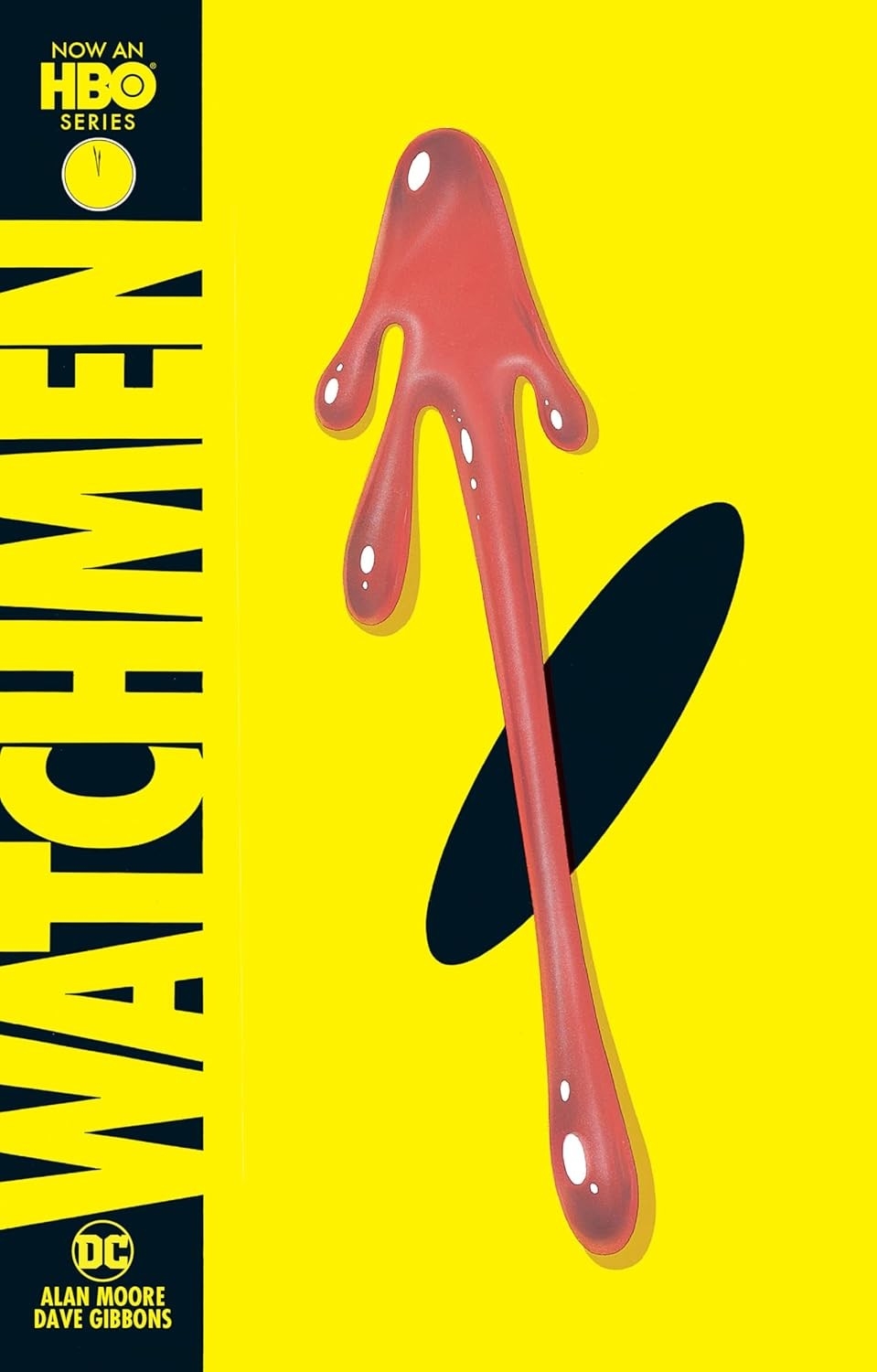 But I’m not comparing Miyazaki with Moore because of their beards, but because of the way they’re both notoriously unwilling ambassadors for their respective media. Moore is associated with comics, particularly superhero comics. He’s critically acclaimed for works such as “From Hell” and “A Small Killing,” but more people still know him for “The Killing Joke” (Batman x Joker) and, of course, “Watchmen.” Miyazaki’s dubbed an anime pro par excellence, linked with landmarks from My Neighbor Totoro to The Boy and the Heron.
The works of both men are often presented as a gateway for newbies, and a paradigm of how good their media – attacked by snooty pundits and geek-bashing haters - can be. Miyazaki and Moore are de facto champions of, respectively, anime and superheroes. Until you look at what they’ve said about anime and superheroes.
To take Miyazaki first, he’s slated anime for more than 30 years. His definitive statement is an essay, “Thoughts on Japanese Animation,” published in Japan in 1988 – the year of Totoro and Akira – and translated in the book “Starting Point.” Miyazaki acknowledges that he fell in love with animation in his youth, with films like Japan’s Hakujaden (Legend of the White Serpent) and Russia’s Snow Queen (extract below). Notably, Miyazaki didn’t meet them as a child. He fell in love with them in his late teens and twenties, when some people might have thought he was already too old for such passions. Nonetheless, Miyazaki often emphasizes the impact of animation, good or bad, on young children.
“I still think that encountering wonderful animation as a child is not a bad thing,’ Miyazaki wrote in 1988. “Yet I’m also acutely aware that this profession is actually a business, targeting children’s purchasing power. No matter how much we pride ourselves in being conscientious, we produce visual works that stimulate children’s visual and auditory senses, and whatever experiences we provide them are in a sense stealing the time from them that might otherwise be spent in a world where they go out and make their own discoveries or have their own personal experiences. In the society in which we live today, the sheer volume of [animated] material being produced can potentially distort everything.”
As for Moore, people may think of him as a superhero guy. However, he told The Guardian as long ago as 2013 that superheroes had become pop-cultural abominations. “They don't mean what they used to mean,” he said. “They were originally in the hands of writers who would actively expand the imagination of their nine- to 13-year-old audience. That was completely what they were meant to do, and they were doing it excellently. These days, superhero comics think the audience is certainly not nine to 13, it’s nothing to do with them. It’s an audience largely of 30-, 40-, 50-, 60-year old men, usually men… I think it’s a rather alarming sign if we've got audiences of adults going to see the Avengers movie and delighting in concepts and characters meant to entertain the 12-year-old boys of the 1950s.”
So, Miyazaki thinks cartoons are bad for kids, and Moore argued that comics – superhero comics, at least – are bad for adults. Moore’s position hasn’t mellowed in the last decade, as is obvious if you read “What We Can Know About Thunderman,” a prose novella included in his 2022 story collection “Illuminations.” It’s a merciless lampoon of the superhero industry, although one of Moore’s few bits of praise goes to an animated hero, the Fleischer Brothers’ Superman. According to Moore, “The only Thunderman [really Superman] that can be said to exist is the perfect and ideal one, who is nothing more than lines on paper and acetate, and the Essler [really Fleischer] shorts are the purest and most glorious expressions of this: the true imaginal essence of this fictional character in a moving, speaking, unbounded form.”
One interesting thing is that Miyazaki has links to Fleischer’s Superman cartoons, and especially to the second of them, 1941’s The Mechanical Monsters. He borrowed the title robots’ designs twice, first in a 1980 TV episode of Lupin The Third that’s available to stream on Tubi, and secondly for the far more benign sky robots in his 1986 film Laputa, The Flying Island. For more of Miyazaki’s very mixed views about the Fleischer studio, see his “Thoughts on Fleischer” essay in “Starting Point;” it was written in 1980, the same year as his Lupin cartoon.
 Of course, the irony in both men’s positions is that Moore is commonly credited with helping “adultify” superheroes, while Miyazaki showed the mainstream that anime could be child-friendly. There are get-outs, though they seem rather half-hearted. Miyazaki says it was okay for a kid to watch one of his films on a special occasion, provided he or she goes outside afterward to catch rhinoceros beetles. Moore’s supporters, meanwhile, argue that a strip like Watchmen is not a superhero comic; rather it’s a literary critique of superheroes. This sounds like the old saw that if something is literary, it can’t belong to a vulgar pop-genre like fantasy or sci-fi.
Beyond the question of whether kids are better off rewatching Totoro or playing with chainsaws (seriously! – Miyazaki let fifth-graders play with a chainsaw at his mountain cabin, summoning up visions of Totoro meets Evil Dead), Miyazaki has other beefs with anime. His 1988 essay attacks the same stylizations which would inspire the Wachowskis, dissing anime “where vaporous and extremely deformed characters inhabit distorted and flashily colorized worlds, where time is infinitely expanded.” Miyazaki got especially annoyed with combining robots and wild-colored hairdos, claiming such “innovations” turn into creative straitjackets, making anime “frighteningly similar” to each other.
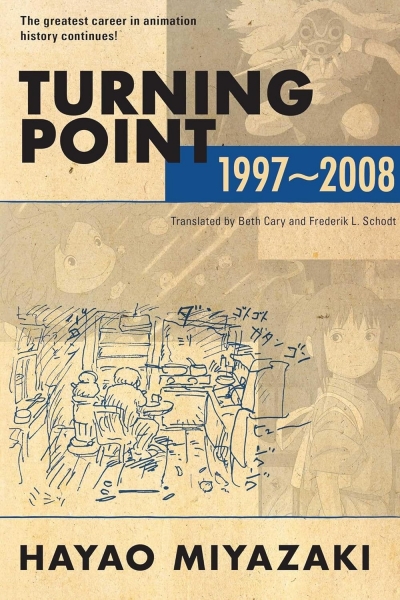
In 1988, Miyazaki pulled some of his punches, admitting there was some good Japanese animation out there. Later, he grew grumpier. “Turning Point,” a second collection of Miyazaki material, includes an interview with the late American film critic Roger Ebert, who naively suggests that animation is on an equal level to live-action in Japan. Miyazaki swiftly rebuffs him; he says he would only recommend a few anime and decries anime’s sex and violence.
In another “Turning Point” interview (p70), Miyazaki specifically denies his films are anime at all, tying in with arguments I covered in an earlier column. “We have consistently tried to make films not anime… We try to find ways of representation understandable to a country grandpa watching our film for the very first time.” Miyazaki contrasts this with what he claims are the fannish, enclosed tropes of anime, where outsiders “can’t figure out what is going on.”
 Over to Moore. In an infamous interview in 2014, conducted by the blogger Pádraig Ó Méalóid, Moore makes similar gibes against enclosed superhero comics. The “Watchmen” author attacks their audience as “having given up on attempting to understand the reality they are actually living in” instead obsessing over the “sprawling, meaningless, but at-least-still-finite ‘universes’ presented by DC or Marvel Comics.” Of course, this is rich considering Moore’s work on a comic like “Supreme,” which Moore turned into a Superman pastiche festooned with fan-flattering in-jokes. Evangelion’s Hideaki Anno would have loved “Supreme;” we’ll get to him later.
Moore’s barrage of bile and insults is meaner than anything Miyazaki has said, but then his anger runs deeper. Most comics fans know about Moore’s decades-long rights wars with corporations such as DC, which he sees as toxic to creators. In a 2012 interview for the Seraphemera Books website (sadly defunct now), Moore described the superhero world as built on creative theft, “toys pried out of the fingers of dead men.” Miyazaki has been far luckier than Moore. Though Miyazaki was rebellious in his youth, a unionist troublemaker at the Toei studio – in “Turning Point,” he recalls fighting “against the old guys who had interviewed me when I was a newly graduated greenhorn” – by the mid-80s, he could create, make and release his own work in a company tailor-made for his talents.
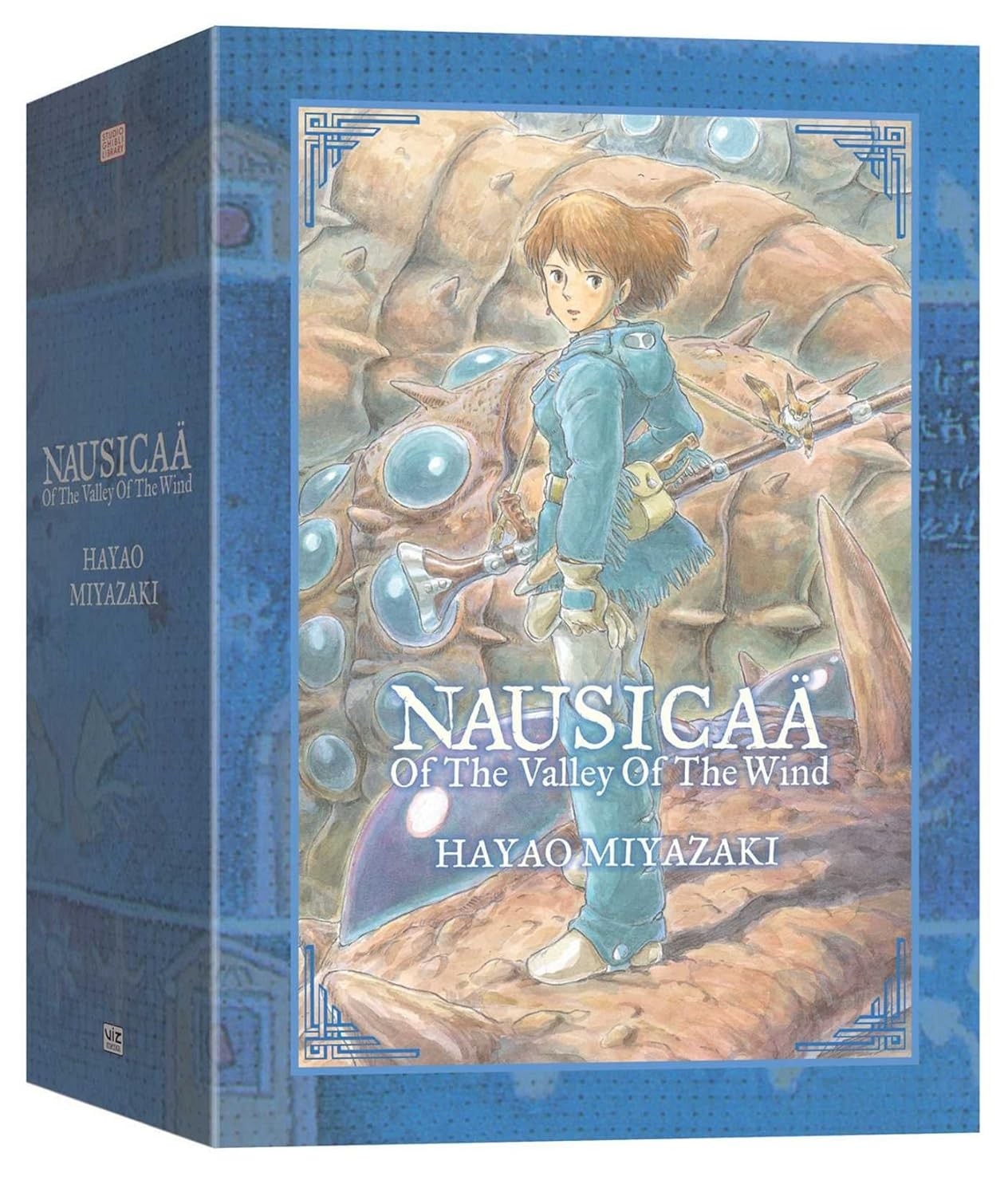
Yet there are interesting parallels between Moore’s and Miyazaki’s careers. For example, while they were developing their individual voices, they each created acclaimed female lead characters in comic strips, placed in far-future worlds, at a time when they were unfashionable. Moore, though, invented a resilient everywoman – Halo Jones of “The Ballad of Halo Jones” – while Miyazaki went for the idealized fantasy of Nausicaa, his closest character to a superhero. And by the time of “Halo Jones,” Moore was already defined as a comics writer, handling the words and giving the drawings to his current collaborator. Miyazaki, meanwhile, is a writer-artist; Moore’s modus operandi is more like Miyazaki’s late colleague Isao Takahata, who didn’t draw but worked with draftsmen to explore a range of art styles.
Both Miyazaki and Moore burnished their early reputations by taking existing characters and making them over as their own; Miyazaki with Lupin the Third in the ‘70s, and Moore with Marvelman (aka Miracleman) and Swamp Thing in the ‘80s. And Moore’s opus “Watchmen” is comparable to Miyazaki’s long strip version of “Nausicaa.” Both push into the darkest territory, with much contemplation of human extinction, moral ambiguity and criticism of the whole notion of a “hero.”
But “Watchmen” and “Nausicaa” bring out a spectacular difference between Moore and Miyazaki. 25 years after Watchmen was published, Moore furiously denounced DC when it launched “Before Watchmen” in 2012, a prequel by other hands. In the Seraphemera interview, Moore declared his “complete contempt” for anyone who might want to see how someone else might treat his characters. “If you are a reader that just wanted your favorite characters on tap forever, and never cared about the creators, then actually you're probably not the kind of reader that I was looking for.”
Of course, Moore saw “Before Watchmen” as DC’s theft and exploitation of his work. But leaving that aside, his comments are echoed by Miyazaki in “Turning Point” (page 76), where Miyazaki mentions a girl who saw his Kiki’s Delivery Service. The girl was swept up in the little witch’s adventures; “I want to keep on watching to see what happens next.” Miyazaki was unhappy. He’d meant Kiki to encourage kids to carve out their own lives, not to live second-hand through a fictional character. Miyazaki responded by making Spirited Away, even though children might watch that film just to see what happened to Chihiro next.
And yet! In 2013, Miyazaki shocked fans by saying in a TV interview that he would be happy for a Nausicaa sequel film to be made by someone else. He named that someone; Evangelion creator Hideaki Anno, an anime fanboy par excellence. I brought up Anno’s relationship with Miyazaki in my column last week: sometimes they’re colleagues, sometimes rivals. Miyazaki briefly refers to Anno in “Turning Point” (page 257). In a 2002 interview, he calls Anno’s animation “self-deprecating and honest in the deconstructive style that it employs” but also “the stylistic equivalent of a dead-end street.”
Don’t worry about Anno. He already gave Miyazaki back as good as he got, in the essay for the Studio Ghibli box-set which I quoted from last week. Anno accused Ghibli and Miyazaki of being superficially feelgood, cut off from the visceral passions of the best anime, self-loathing and emotional complexes among them. This is the maker of Evangelion speaking, remember.
It’s irresistible to look at Miyazaki and Anno – who are such friends that Anno voiced the lead character in Miyazaki’s 2013 film The Wind Rises – and contrast the infamous feud between Alan Moore and superhero comic star Grant Morrison (author of “Supergods: What Masked Vigilantes,” “Miraculous Mutants and a Sun God from Smallville Can Teach Us About Being Human”). This feud is laid out at huge length from Moore’s side in the last section of his interview with Pádraig Ó Méalóid. In it, Moore calls Morrison a “medicinal leech,” and far less flattering names. Morrison’s side is here.
We won’t go into the merits of the argument here – that would take an article about 10 times the length of this one - but it’s notable that Miyazaki could have used some of the same ammo on Anno. For example, Moore accuses Morrison of shadowing Moore’s own career with obsessive closeness. Miyazaki could easily say the same of Anno, whose early hit (Nadia: The Secret of Blue Water was inspired by a discarded Miyazaki story. Later the TV Evangelion’s plot revelations about Asuka’s mother – especially the pivotal use of a doll – were suspiciously close to a backstory in the “Nausicaa” comic about the mother of the character Kushana. Add Anno’s cheeky comments about Miyazaki, and remember that Moore trashed Morrison for “simultaneously borrowing heavily from my work and making studiedly controversial statements about me.”
In contrast, Miyazaki has publicly let Anno make the Miyazaki equivalent of Before Watchmen, should Anno ever get round to it. Superhero comics adore “what would have happened if?” scenarios. Perhaps Miyazaki represents a luckier version of Moore, who didn’t have to endure the same bitter industry experiences which seethe through Moore’s recent interviews. Consequently, Miyazaki can jab at the “otaku” mindset without (metaphorically speaking) spitting in fan’s faces and exploding like a New York squid.
By the way, I should add that my own personal experience with Moore was extremely positive. Back in 2001, when the film version of his “From Hell” strip was being released, I had the chance to do a phone interview with him. Of course, Moore had no comment on the film (with Johnny Depp and Heather Graham) but he was very willing to talk about the strip, giving answers that were lengthy, erudite and fascinating – one of the most generous interview subjects I can remember, though I shudder to think what he made of me.
As I remember, at the end of the interview, I asked Moore if he had read Miyazaki’s “Nausicaa” strip, which was already available in English. Moore hadn’t, though (as I recall) he indicated that he’d heard of it. As for Miyazaki, there are some world comic writers he definitely knows, including France’s Moebius (Jean Giraud) and America’s Richard Corben, but they drew their comics, unlike Moore. Still, perhaps he and Miyazaki could bond over Fleischer cartoons…