Season 2 of the series hit Crunchyroll this week, and anime columnist Andrew Osmond looks at how this teen comedy-drama manages to be both sweet and sexy.

A new TV anime season has begun, and I’m covering a returning series, My Dress-Up Darling, which you can find on Crunchyroll. The opening episode of the second season became available this week, though it was a long wait for fans – the first season was broadcast back at the start of 2022. I’m focusing mostly on Season 1 here, partly as a recap for anyone who needs it, but also as an intro for anyone thinking of boarding now. (I’ll comment on the new episode too.)
Animated by the CloverWorks studio, My Dress-Up Darling is a teen comedy that aims to be both sweet and sexy. One of those things is far more subjective than the other, though anyone expecting a subtle or sophisticated sex comedy can’t have seen much anime. Darling is a fanservice series where one episode is called “It’s Probably Because This is The Best Boob Bag Here,” and where the girl character is often cheerily half-naked (or more) while a boy is hot and bothered. On the face of it, that’s not much advance on American Pie from 25 years ago. But…
My Dress-Up Darling is really, really sweet.
It’s about cosplay, but it’s also about fandom in a very wide sense, and what “fans” of very different things share. The hero, schoolboy Wakana, doesn’t consider himself a fan at all. He’s obsessed with hina dolls – elegantly costumed little dolls created by dedicated Japanese artisans. One of those artisans is Wakana’s grandfather, who’s the boy’s guardian following his parents’ deaths. Wakana lives with Gramps in their house-workshop, working on his dolls, absorbed in making their eyes and features ever more beautiful, ever more perfect…
From the start, many viewers will see Wakana as a textbook otaku, the kind who sees imaginary females as far lovelier than real ones. The hina dolls are pedantically “3D” figures, not the 2D kind extolled by hardcore otaku, but then the 2D crowd loves figurines too. We’ve seen chaps like Wakana in other anime. In Satoshi Kon’s classic 2004 series Paranoia Agent, one extreme otaku lives in a room surrounded by hundreds of cutesy figurines, into which he pours his existence. Later, the figures come alive: one says terrifyingly of their human owner that, “He’s not capable of doing anything unless we’re watching him.”
Even Wakana’s grandpa worries that the lad has no friends – Wakana thinks he has nothing in common with his classmates. (Not that Wakana sees himself as better; he’s just utterly separate.) Still, he can’t help noticing one of the girls, Marin, with her half red-dyed hair, piercing eyes, and total confidence. She’s extremely cheerful, yet with flashes of intensity. In her first scene, she fumes over a guy calling her a nerd: “You just don’t go making fun of things people clearly like.”
Later, she sees Wakana after school and realizes his classmates have put all their chores onto him. Suddenly she’s like a teacher, lecturing Wakana to respect himself: “You need to speak up about how you’re feeling.”
Down, boy!
And then, the fateful meeting. Wakana sneaks into the school’s “sewing practice” room – his sewing machine at home has broken, and he needs to finish the clothes for his latest doll. Lo and behold, Marin shows up too, with her own garments to finish – a cosplay outfit, based on her favorite game character. Despite his bemusement, Wakana can’t help but judge – Marin’s costume is terribly made. Look, it needs a lining, and reverse stitching, and a seam allowance, and…
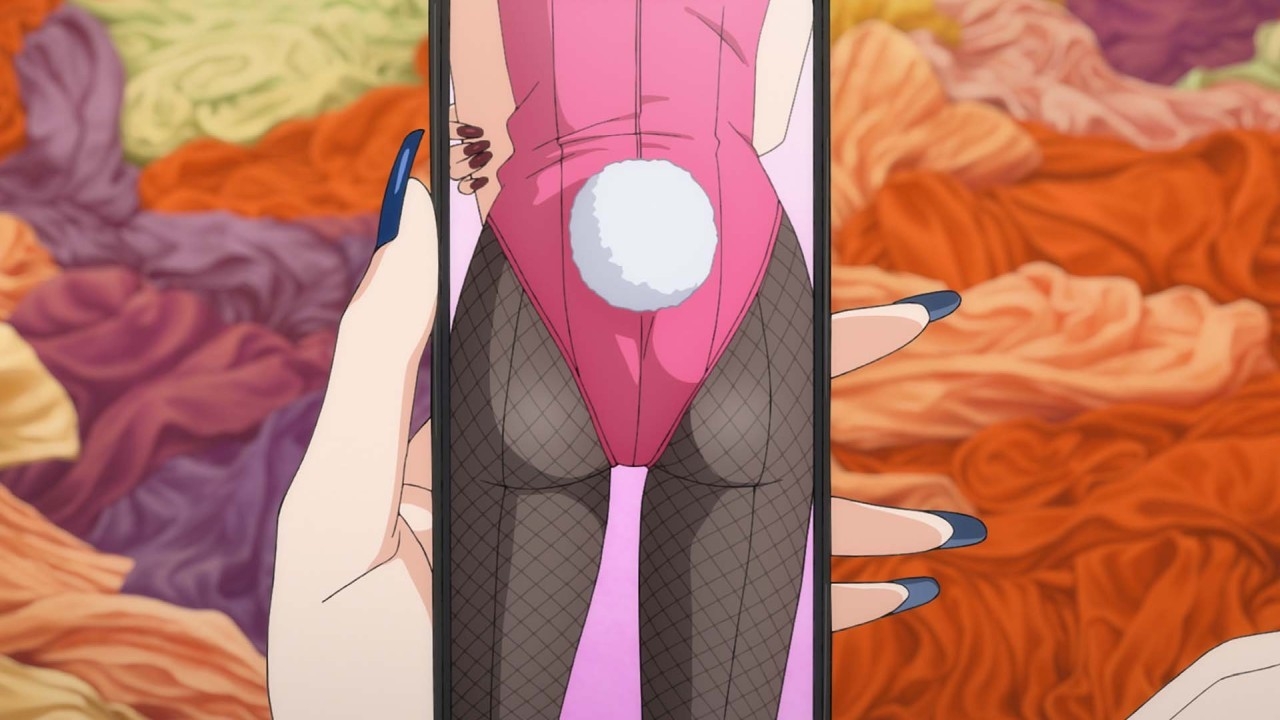
Instead of flaring up, Marin implores him – could he make her costume? A dazed Wakana says yes… and then learns Marin wants to cosplay the heroine of an eroge game, which is to say a porn videogame. Things heat up fast from then on. Soon Marin’s in his bedroom, stripping to a barely-there bikini and asking Wakana to measure her, while he desperately tries to control his reactions.
It’s a male-oriented fantasy, of course. Of the characters, only Marin and two other girls brought in later are subject to the show’s fanservice – viewed sexually, that is, through Wakana’s guilty gaze. It’s interesting that within the story, Marin’s first cosplay is inspired by a videogame that’s shown to be as much a male fantasy as the show we’re watching. However, it’s never convincingly explained why Marin, who’s straight, likes the game so much.
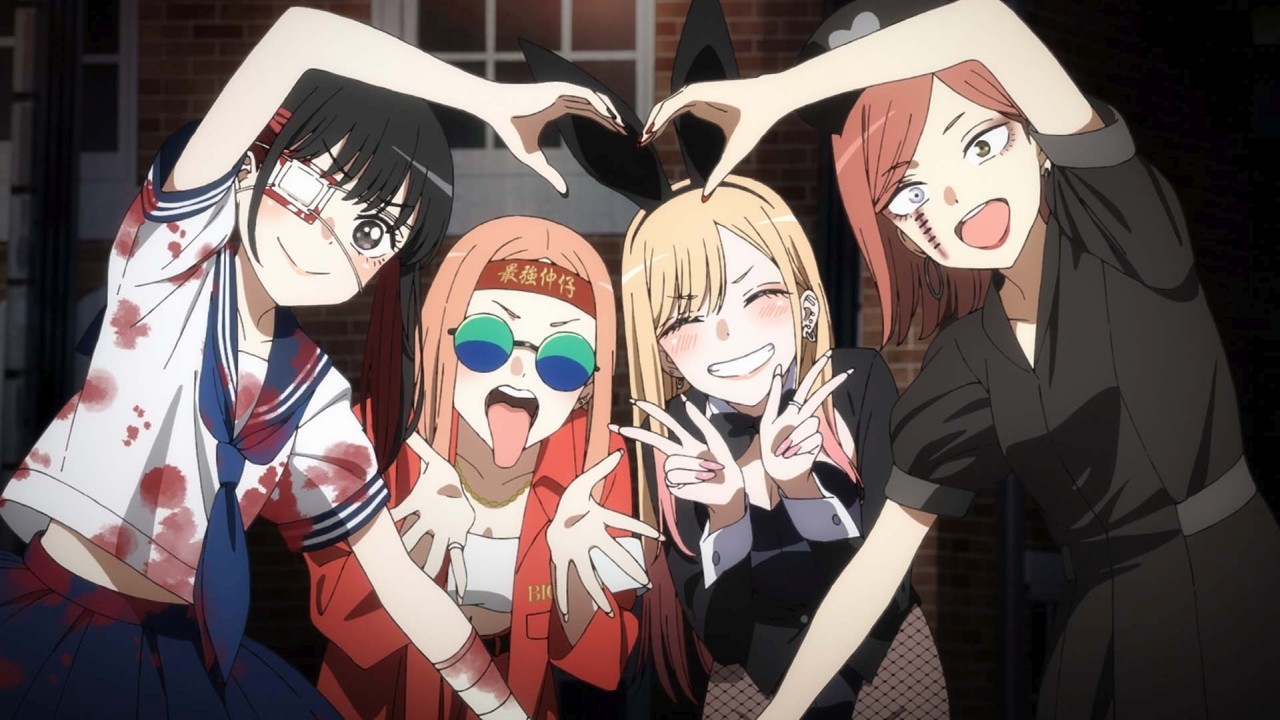
Yet My Dress-Up Darling itself is a rare sexy anime that you could enjoy for the story round the sexy bits, and the comedy in those bits. Take the aforementioned bedroom scene, where Marin blithely strips down to be measured for her costume. Wakana bangs his head manically on the floor as he tries to be a gentleman, not looking at boobs at all. In one way, it’s the same joke as Tex Avery’s horndog classic Red Hot Riding Hood back in 1943… except now the gag is Wakana’s desperation not to be a lust-crazed Wolf.
The difference between Darling and something like Red Hot Riding Hood - or American Pie for that matter - is that the anime highlights how decent, and how serious both characters are. It’s amazing what an anime can get away with when the protagonists are respectable. I’d refer you to a 2004 anime series, Koi Kaze, which was about incest and still managed to get an American DVD release for a time. For its part, Darling treats lust as a (funny) distraction from what’s really important – the things the characters love, the creativity that comes from that love, and the affinities between those loves.
The two leads are nice, upstanding kids. Wakana’s no lech and Marin’s no show-off. Or maybe they are a bit, but it’s incidental. An implied joke is that Marin trusts Wakana so easily because he’s chronically uncomfortable around her. Moreover, Marin feels solidarity with Wakana. They have passions (dolls, costumes) that other people wouldn’t start to understand. The story viewpoint slides interestingly from Wakana’s side towards Marin’s in the second half.
The animation rises to the occasion in tender moments of real romance, while a hotel room episode is ludicrous, sexy and romantic. Midway through the first season, new girls bring in some harem tropes, but they fade out before they can spoil the relationship we care about. Too much of the soundtrack is plinky-plonky muzak, but the invented media in the show is great. There’s a scary Madoka kids’ magic girl series, and a slice-of-life manga with a succubus, and they both help fuel Marin’s heart-and-soul cosplay.
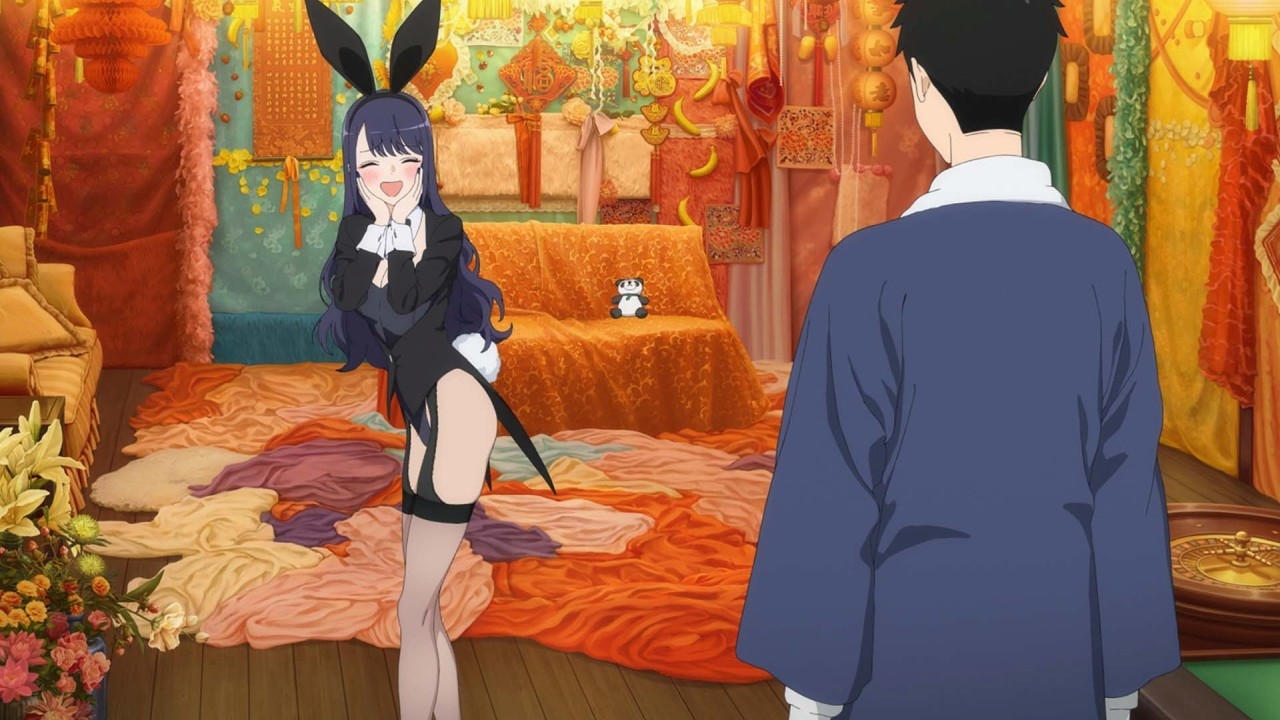
Of course, Darling still has its cake too – cheesecake, a selling point in ridiculous situations. Marin has female friends who know about her love for cartoon characters, yet she doesn’t ask one of them to help with her body measurements and save poor Wakana a coronary. This series isn’t an anime to show to your parents to teach them about cosplay. A wet dream gag is cute, but a later joke about a new character’s privates is (a) delivered very wittily and (b) shocking enough that only an anime could do it.
And yet some of Darling’s jokes have a hilarious logic, like the doll-making Gramps being startled when he opens Wakana’s bedroom door and finds the boy staring fixedly at a porn game… because Wakana is so determined to get every costume detail in the game perfect for Marin’s sake. It’s so cringeworthy, and so sweet, and it says so much about the excesses of both fandom and friendship.
The new season
This week’s new episode (carrying straight on from the previous one) has the same kind of situations that fans would expect. The exception is a last, extended scene at a karaoke event which suggests Wakana’s time with Marin is starting to open him up to the world – though with the joke that the boy spends the whole scene hidden in a bunny suit. Visually, though, the episode is something else.
Don’t worry, it’s good news. Many viewers of TV anime know the experience of starting a new season of a series they liked, only to realize the production values have been drastically downgraded. Typically, that coincides with a change of studio. One well-known case was the popular superhero comedy One-Punch Man, which I didn’t like so much to start with, but at least it had superlative visuals… till the 2019 second season became a mess of blurred lines, fists and strobing frames. More recently, Blue Exorcist’s later seasons (from 2024) have little of their predecessors’ gloss, though I still enjoy them.
Happily, My Dress-Up Darling is the reverse of such cases, though the studio hasn’t changed – it’s still CloverWorks. Darling’s first season had some strong designs and staging and made fluent use of manga-cartoon visuals to intersperse the drama. However, I didn’t find the presentation surprising or exceptional by TV standards, barring a few romantic highlights.
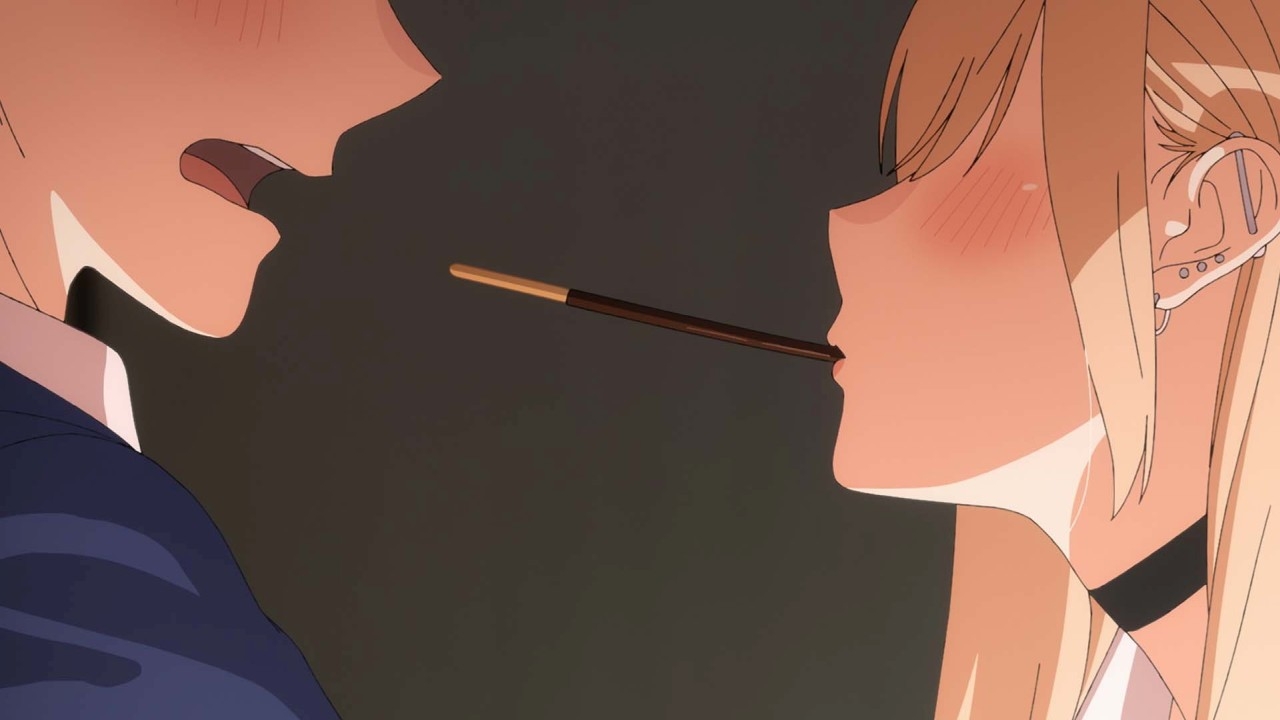
Season 2, though, seems to have had a rocket put under it – perhaps a benefit of the extended break since Season 1. The animation looks far more vivid and visceral than before, from a fearsomely sultry moment with a shared Pocky stick, to a train interlude which combines realism and impressionism. Perhaps it’s just a one-week quality bump to get people watching again, in which case the series may be back to “normal” next week. Even if that’s the case, it’s still a good garnish.
I’ll end with some background notes. One is that the hina dolls Wakana loves aren’t an invention of the show, but a centuries-old Japanese tradition. The classical dolls depicted the Emperor’s court in Japan’s Heian Era a thousand years ago. The belief was that the dolls would protect young children from illnesses or accidents. However, Darling was directly inspired by a craftsman called Keisho Suzuki, who makes more modern-style hina dolls in an area called Iwatsuki, where Wakana lives in the story. Anime News Network reported that Suzuki’s doll sales soared in the anime’s first weeks.
On a more up-to-date note, many of Darling’s scenes take place in the Tokyo district of Ikebukuro. This contains a shopping area nicknamed “Otome Road” or “Fujioshi Street;” the shops include a branch of the K-Books chain which specializes in cosplay. As you may guess from the nicknames, the Ikebukuro stores tend to cater to female fans, in contrast to Tokyo’s infamous Akihabara district. In Episode 5 of the first season, Wakana and Marin go to a cosplay convention at a mall called “Morning City;” it’s really the Sunshine City mall in Ikebukuro, which regularly hosts such events.
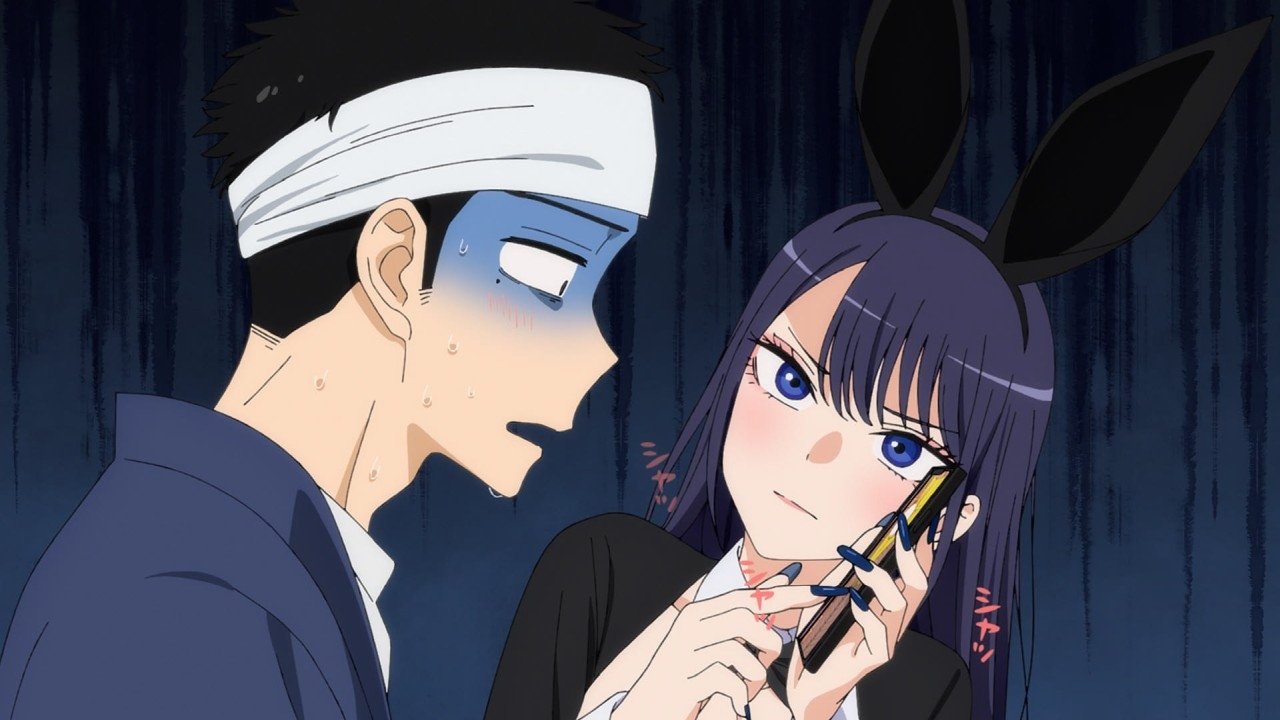
I also can’t resist noting that for any British anime fans of a certain advanced age, the Wakana’s comedic combo of sexual desire, terror and sheer embarrassment suggests an alternative name for the series – Carry On Cosplay. If you’re confused by this inscrutable cultural reference, then look up “Carry On films,” though you might still be confused after you do…
And finally, I stand by my comment that My Dress-Up Darling is an overtly male-oriented comedy, though its best virtues play to a wider audience. This series is based on a just-finished manga – it ended this March – which is credited to one Shinichi Fukuda. That’s a male name in Japan; yet in the “extra” notes in the strip, the author seemingly revealed that she is, in fact, a woman.