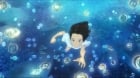
Director Tomoki Misato discusses crafting and filming a tactile, textured, and hand-made world for the beloved characters’ new series using wool, magnets, 3D printers, and an innovative motion control camera rig; now streaming on Netflix.
In 1975, a tiny white rabbit with a pink hat named My Melody became the fifth animated character from Sanrio, a Japanese entertainment company that specializes in creating “kawaii” (cute) characters. While Hello Kitty is by far the most well-known of the 450 or so characters Sanrio has created, My Melody and Kuromi – another white bunny in a jester hat who serves as My Melody’s rival – have been listed in the top 10 favorites in Sanrio Character Listings’ annual poll for the last decade.
Just in time to celebrate My Melody’s 50th anniversary and Kuromi’s 20th, Netflix has just debuted the new stop-motion animation series My Melody & Kuromi, which launched yesterday, July 24.
In the show, My Melody runs a cake shop in her hometown of Mariland. Her shop is always filled to the brim with customers — and delicious desserts. Meanwhile, Kuromi’s nearby candy shop is always empty, which makes her furious. She simply can’t compete with My Melody and her delicious flavor combos. As the two face off in a sweets-making contest judged by renowned pastry chef Pistachio, they’re suddenly faced with a crisis that endangers the whole town. If Kuromi can set aside her anger toward her self-proclaimed rival for long enough, can she and My Melody team up to save Mariland?
Check out the trailer:
Based on Sanrio’s characters, My Melody & Kuromi is produced by TORUKU from WIT Studio from a screenplay by Shuko Nemoto. The series is directed by Tomoki Misato, known for the stop-motion shorts My Little Goat and Atashidake o mite, as well as the TV series Pui Pui Molcar. AWN chatted with Misato about the series and the meticulous planning that went into making this magical, hand-crafted, and truly “kawaii” show to celebrate two beloved Sanrio characters.
Victoria Davis: It’s the 50th anniversary of My Melody and the 20th anniversary of Kuromi. Why did stop-motion feel like the right medium to celebrate these Hello Kitty universe characters?
Tomoki Misato: From the beginning, I imagined that the short characters would look very cute moving in three dimensions. And many of the characters in Mariland, including My Melody herself, are based on animals, so animating with wool material seemed like it would fit them well.
This was also a Netflix project, so we had a larger budget than a normal animation production. I thought this was a chance to do something on a bigger scale. I felt motivated to take on all sorts of challenges in stop-motion animation that hadn't been explored before.
VD: This is Toruku Studio's first stop-motion project. What were some of the biggest challenges?
TM: For me, the hardest part was coordinating such a large staff while communicating instructions as clearly and precisely as possible. Back when I was a freelancer, I would make stop-motion animation in one room of an apartment with a small staff of three to nine people. But the scope was much bigger with this project. The staff ballooned to nearly 100 people and with so many people involved, giving instructions felt like playing telephone.
Up until now, I enjoyed doing animation, creating models, and editing for my projects, so it was a bit stressful having to let go of those responsibilities. But this was also the first stop-motion animation project for WIT Studio, which mainly does traditional animation. So, the structure of the production was rather flexible, and I was able to do some animation on certain cuts in-between giving directions.
It was tough getting used to managing so many staff members, but thanks to this large crew, we were able to complete this large-scale project that would have been hard even to attempt previously.
VD: You say that you wanted to take on challenges in stop-motion that hadn't been explored before. What was it like exploring this much beloved world through the meticulous, detail-oriented nature of stop-motion? How did you go about hand-crafting Mariland and its characters?
TM: The characters are popular around the world, so I was glad to be involved in this project, but at the same time, I did feel some pressure. I approached the making of this series with the hope that both general audiences and long-time fans of My Melody and Kuromi will be pleased with it.
The characters were mainly made with wool felt. We had support from Hamanaka, one of Japan's leading handicraft manufacturers, and they even custom-dyed new colors for us. We used silicone for My Melody and Kuromi's scarves, so My Melody's scarf has a cloth-like texture, while Kuromi's scarf is more glossy.
VD: I imagine keeping these wool puppets looking fresh and clean every day after being handled by so many animators is a challenge. What’s the care regime for these puppets? How do you keep them clean or go about cleaning them when they get dirty?
TM: There was a constant issue of the figures getting dusty and dirty after the animators handled them, so the model staff were in charge of their care. They would use needles or masking tape that wasn't too sticky to remove the dust. If the “skin” was just too worn, they would remove the felt or cover it with new felt.
VD: Many stop-motion animators say one of the best parts about these projects is finding new materials to create the characters and their world. What are some of the more unique and fun materials you used to craft this show?
TM: Based on the original, simple appearance of My Melody, we reduced her glossiness and took efforts to create an overall matte effect. To do that, I used a 3D printer for the first time, which allowed me to create my ideal texture for the mushrooms and flowers. But we had to change the color and shape of each, so they didn't just look copied and pasted.
VD: One of my favorite scenes is where My Melody is shopping in the town square and there’s this beautiful water fountain. The water looks like it’s crafted out of pearls. How did you pull off the trick of making it look like water was flowing in this fountain?
TM: The water from the fountain was made with transparent beads. We tried to use real objects as much as possible for things like rain, smoke, and honey to achieve that distinctive handmade charm.
The fountain movement was created in the same way as a 3D zoetrope. By turning the whole thing on a central axis, the water looks like it's flowing.
It would be a shame if it ended up looking like computer graphics despite all the effort we put into making it by hand, so we deliberately lowered the frame rate to give it that handicraft feeling.
VD: What were some of the more difficult stop-motion effects or visual effects produced on the project?
TM: There were a lot of difficult parts about the series, including a chase scene and some scenes towards the end of the story, which I can’t share just yet, that were especially difficult.
Compared to CG animation and 2D animation, stop-motion animation is the most analog and limiting technique in terms of production. However, when creating the storyboards, I told the staff to ignore the fact that it will be stop-motion animation. That way, they wouldn't easily assume we couldn't do any over-the-top effects.
As a result, we got wonderful storyboards packed with everything they wanted to see. Then I discussed how to film this with stop-motion animation with the cinematographer. There were many obstacles, but my confidence grew once I saw that we could actually overcome them if we tried.
VD: Kuromi and My Melody’s mouth movements and facial expressions change very frequently. How many copies/replacements of the mouth and eyes were there?
TM: We used around 80 parts on one My Melody figure. Including minor characters, I think we had over 3,000 parts in total.
We changed their expressions by sticking the eye and mouth parts to the face with magnets or needles. Also, the skull on Kuromi's scarf changes expressions to fit her mood. The face parts for the mouse Flat were the smallest, so we often lost track of them during the shoot.
VD: There are many scenes where the camera starts out showing an overview of Mariland and then zooms in on the characters walking below. There are also scenes where the camera zooms in very close to objects, like the cakes in My Melody’s shop. How did you tackle the challenge of scale on this show?
TM: In terms of scale, when we wanted a wide, overhead shot, we made small characters specifically for that. I was very particular about the camera work. The most revolutionary technique developed for this project was a new camera platform.
We combined the names of the platform developer and cinematographer to call this platform “Kawajin.” We could easily adjust the height and rotation on three axes just by moving the handle. For camera work in my previous project, I would put the camera on a pile of DVD cases and books to increase the height and change the angle slightly by putting thick paper between them. It was like playing Jenga.
Compared to that, we had a much wider range of camerawork options, so we were able to try our hand at more cinematic scenes. We also used a motion control crane called VOLO, which the cinematographer had.
VD: There are so many adorable little baskets of candles, strawberries, potion jars, and other things like that in this show. I bet the team loved putting it all together on set. What are some of your favorite set pieces?
TM: I personally like the tree stumps. We used soft fabric for the surface of the trunk to make them as cute as possible.
We referred to various materials, like Sanrio’s official magazine The Strawberry News, and art books, to help us transform all of the characters, sets and props to maintain the cute Sanrio style.
I also like Kuromi's vehicle. For the shot when it transforms into an airplane, we did that while switching out all the parts. I also think the sweets that appear in the series are all delightful. Unfortunately, many of the tasty-looking sweets didn't end up getting much screen time, so we put them in the final ending credits.
VD: How would you like this show to add to the legacies of characters My Melody and Kuromi?
TM: I want to maximize their charm through stop-motion animation and create a new relationship between My Melody and Kuromi. The story has dramatic elements that go beyond mere cuteness, so I believe this series will make viewers surprisingly excited and emotional. I hope long-time fans of these characters will be more than satisfied with this series and really enjoy it.

Victoria Davis is a full-time, freelance journalist and part-time Otaku with an affinity for all things anime. She's reported on numerous stories from activist news to entertainment. Find more about her work at victoriadavisdepiction.com.