The director of GKIDS’ new sports anime feature, based on Uoto’s manga, discusses his mix of live-action and different styles of animation, and his approach to visually depicting runners’ speed, preparation, and crushing anxiety; in theaters October 12.
The last time anime director Kenji Iwaisawa thought about a 100-meter run was in high school. So, when he was approached to direct a film based on Uoto’s five-volume manga “100 Meters” (Hyakuemu), Iwaisawa knew he’d need to research the sport of track and field.
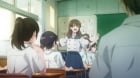
But Iwaisawa did bring expertise to the table that would be perfect for animating a story about speed and movement: rotoscoping. Animating on top of live-action performance, rotoscoping is a style Iwaisawa has used in his previous projects, including On-Gaku: Our Sound, which he directed in 2019.
100 Meters, releasing in North American cinemas by GKIDS on Sunday, October 12 with a special screening in Los Angeles Friday, October 10, follows Togashi, a track star who is born to run. As a kid, he was naturally gifted and wins every 100-meter race without effort. But in sixth grade he meets Komiya, a transfer student who is full of determination but lacks technique. In teaching him, Togashi gives Komiya a new purpose: to win no matter what. Years pass by, and Togashi and Komiya meet again as rivals on the track and reveal their true selves.
Check out the trailer:
Produced by Pony Canyon, TBS TC, Asmik Ace and GKIDS, 100 Meters is Iwaisawa’s third time in the feature film directing chair. AWN talked with the rotoscope-extraordinaire about his love of the craft, the challenges of creating a long-form drama about short distance running, animating anxiety, and his relationship to the sport following the film’s completion.
Victoria Davis: I’ve read in previous interviews that you are a big fan of rotoscoping animation. So much so that we can expect its use on any of your projects. What first attracted you to this animation style?
Kenji Iwaisawa: I originally started with my interest in live-action filmmaking. I was on staff of a live-action film crew and wanted to create my own live-action film. But it was really difficult. I wasn't able to create what I wanted to, what I had envisioned in my mind. So, I sort of gave up for a while.
But then I discovered, or found out, if I incorporate live-action film and my love of drawing, that's rotoscoping. I didn't even know what rotoscoping was at the time. But someone had told me about it and that's when I discovered it. And it turned out it fit my style. So that's how I started. And that's where I still am.
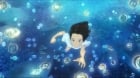
VD: It really works for this film because there are so many visual representations of speed and agility and, because of the rotoscoping, you can really feel that momentum. But there are also other kinds of visuals that you play with in this film, like portals of colors and rough, black and white pencil animation, to showcase speed in a race or as a person's flying down the track. What were some of your favorite visuals in this film?
KI: I think my favorite scene visually is when Komiya is in high school and he competes against his senior at regionals. He starts at the start line, but then I intentionally frame out and only show the sky while he's running. The audience only has the sound to figure out what's going on, but I think that visually is my favorite scene.
VD: That’s a cool one. My favorite is probably the times you wobble and stretch the visuals from a runner’s point of view to show anxiety. How did you land on that way to illustrate that emotion? Did you draw from your own experiences with anxiety?
KI: Actually, I haven't really experienced that level of anxiety or panic. So, I really couldn't incorporate my own experiences into the animation. I just thought objectively about how I could visually convey someone going through a mental breakdown and incorporate that into animation in a way that would be easy to understand.
And I came up with those visuals during the animation process. It wasn’t like that in the original manga. I thought it was really important to show visually what was happening in the minds of these runners, from doing things like changing color to suddenly being black and white or, depending on the character's POV, making something blurred. Because the animation process takes a long time, I was able to come up with that idea later and talk to the animators.
VD: It’s nice to know there are times where the lengthy animation process can work to a director’s advantage. Was the subtle dilation and shifting of the character’s pupils something you came up with in production as well? These runners are very calm and cool, and their eye movements are one of the main indicators of their emotions.
KI: It’s a stoic sport. Many of the character expressions and details in their faces were already set from the beginning in the manga. There were times where I asked the animators, “Can you exaggerate that a little bit more?” But that was always part of Uoto’s character design, and his characters showed their emotions.
VD: What were some of the biggest challenges on this film? You have said in previous interviews that the live-action prep for rotoscoping the race in the rain was particularly challenging. But were there other scenes that were difficult to pull off?
KI: In addition to that rain sequence, like you said, this movie is really dialogue heavy. There are a lot of scenes where there are two characters just standing there and talking and there's hardly any movement at all. So, it was really a challenge to keep those scenes interesting. I'm really curious to know, how did I do?
VD: You did a great job! It was fun to see how the characters would shift and move as they talked to each other, especially the scenes where that girl is trying to convince Togashi to join the track and field team. You really believe these are two nervous teenagers.
KI: I did give directions to the live-action actors to try to move or shift a certain way while they're talking. I’m glad it looked good.
VD: I don't know if you had been much of a runner before this film, but what is your relationship with, and appreciation of, this sport and the athletes after making 100 Meters?
KI: When I first took on this project, I didn't know much about track and field. But then, working on this project, and as I researched the sport, interviewed the people involved, and learned about the movements of the athletes, it was an experience that really did change my view of running. I also didn’t know that humans could really run this fast.
100 meters is such a short distance that's done so quickly. But the preparation for those 100 meters is so long. These runners have to work on staying in their best condition and peaking their speed at the right time. There’s so much work that goes into it.
VD: It's not unlike animation. So much work goes into preparing just one frame of this film.
KI: Yes. That’s true.

Victoria Davis is a full-time, freelance journalist and part-time Otaku with an affinity for all things anime. She's reported on numerous stories from activist news to entertainment. Find more about her work at victoriadavisdepiction.com.