The writers and directors of the smash Netflix animated musical talk about balancing Korean culture, music, and mythology while telling an entertaining story with characters that feel like real K-pop stars within a legitimate K-pop world.
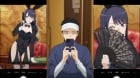
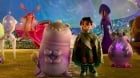
In Netflix’s hit animated musical, KPop Demon Hunters, pop idols Rumi, Mira, and Zoey lead double lives - selling out arenas by day and battling supernatural forces by night. They’re members of the world-renowned K-pop girl group HUNTR/X, who balance their lives in the spotlight with their secret identities as demon hunters.
With a voice cast that includes Arden Cho, Ahn Hyo-seop, May Hong, and Ji-young Yoo, and music from K-pop powerhouses including Teddy Park and members of TWICE, the film fuses Korean folklore, music video stylization, and supernatural action into what quickly become the most streamed movie on Netflix globally since its June 20 debut. The soundtrack’s lead single, “Golden,” performed by the fictional girl group, became the first virtual artist track to top both the Billboard Global 200 and Global Excl. U.S. charts and is being entered for Academy Awards consideration.
Maggie Kang and Chris Appelhans direct, with a script by Danya Jimenez, Hannah McMechan, Kang, and Appelhans. Michelle L.M. Wong produces alongside co-producers Scott Berri and Jacky Priddle. The film is from Sony Pictures Animation. It also stars Yunjin Kim, Joel Kim Booster, and Liza Koshy, with Daniel Dae Kim, Ken Jeong, and Byung Hun Lee.
Appelhans wrote and directed the well-received 3DCG feature, Wish Dragon, produced with Aron Warner and Chris Bremble through his BASE Media; it opened in Chinese theaters back in January 2021, hitting Netflix that summer. He’s currently writing that film’s sequel. Kang has been working steadily on numerous big, animated features like Trolls, Kung Fu Panda 3, and Rio 2 as a story artist, storyboard artist and head of story for 20 years.
AWN recently spoke to the pair about their hit film, how the project came about, and how they balanced Korean culture, music, and mythology with Western storytelling sensibilities.
Dan Sarto: How did you both get involved with this project?
Maggie Kang: I had worked with Aaron Warner for a few years on one of the Shrek films [Shrek Forever After] at DreamWorks and built a relationship with him. We’d talked about finding something we could do together - me directing, him producing. He was at Sony on Wish Dragon and asked if I had anything to pitch. My partner and I were out driving while our one-year-old slept in the back seat, and I said, “I want to do something that combines Korean demonology, demon hunters, and K-pop.” We came up with the concept on that drive. I pitched it to Aaron the next day and he said, “I love it. I want to make this.” A week later, he had a deal ready.
When we started talking about a co-director, I suggested Chris. Aaron initially said no - but came back and said, “You know who would be great? Chris.” So, I pitched it to him like it was his idea.
Chris Appelhans: That wasn’t my “no” - that was Aaron’s! As soon as I heard the idea, I said, “That sounds amazing.” Maggie and I sat down and talked for maybe an hour, just loosely brainstorming. Right away, I could tell this person knows what they want. They have a strong point of view as a storyteller. We shared similar tastes and influences. I was supposed to be taking a break, but I immediately said, “I have to do this. It’s the coolest thing.” Credit Aaron for knowing it would be a good match.
DS: The film pulls from a lot of sources - K-pop, Korean cinema, animation, music videos… it’s not anime, but it carries some of that aesthetic. At the end of the day, though, it’s a feature film and however catchy, needs to entertain for 90 minutes. What were some of the biggest challenges making that work?
MK: Story.
CA: Yeah - story. That was the biggest challenge. Bringing all those ingredients you listed together in every scene: the look and feel, the songs, and making the K-pop feel legitimate and really hold up in the K-pop space. We wanted the girls to feel like real idols and real characters.
MK: It always comes down to how much you connect with the characters. We leaned into the things we love. As a director, your biggest critic is yourself. We wanted to make a film that was really different, but also something we’d love to watch. All those things you listed were elements we wanted to see in a movie. So, we tried to put everything in.
DS: Chris, I always tell people that ever since Wish Dragon, no one has created a cast of characters like you did, with those nosey apartment neighbors, that felt so incredibly authentic, completely spot on to so many people I met in all my time in China. You’re a Westerner. When working with Asian characters and storytelling, how do you strike a balance between what you know about these characters, what you think you know, and what others will think of your take? Your film features Korean female heroes, pop stars, demon hunters, a boy band… there are a lot of boxes to check.
CA: I had a North Star every day - and that was Maggie. She knows K-pop and K-dramas way better than I do. And she has what I don’t have: lived experience and a point of view as a Korean filmmaker. I took that for granted.
When we had questions - does this fit the movie, does it feel right - I could always count on Maggie to be the filter. When I see the movie now, every shot reminds me of her. That’s a good sign that the film is personal and specific.
That made things easier for me. I could bring what I did know about Korean culture and just unleash it. There were so many times I’d say, “Maggie, you know that thing in the K-drama where the actress does that thing?” And she’d say, “Yeah, of course.” I’d say, “Can I just film you doing that?” We must have 800 reference videos of Maggie.
MK: This is a Korean story, but it’s not 100% Korean. I’m Korean culturally, but I grew up in North America. I was born in Korea and raised in Canada. I live between those two cultures. My humor comes from Korean variety shows and dramas, but also Western influences. I wanted to mash those together. And right now, everybody is keen on consuming more Korean content.
CA: I love that we’re in a time where cultural identity, entertainment, music, and storytelling are all getting mixed up. Half our storyboard crew didn’t grow up on Disney - they grew up on anime. So, we’d make FLCL references instead of Bambi references. That kind of cross-pollination is happening across animation right now.
MK: That’s where the new stuff is coming from. We’re pulling from a giant melting pot of influences and cultural authenticity - and that’s exactly where this film lives.

Dan Sarto is Publisher and Editor-in-Chief of Animation World Network.