Columnist Andrew Osmond interviews ‘Ghibliotheque’ podcasters Michael Leader and Jake Cunningham about their new book that travels the globe to dig deep into the medium (hint - it’s not a genre.)
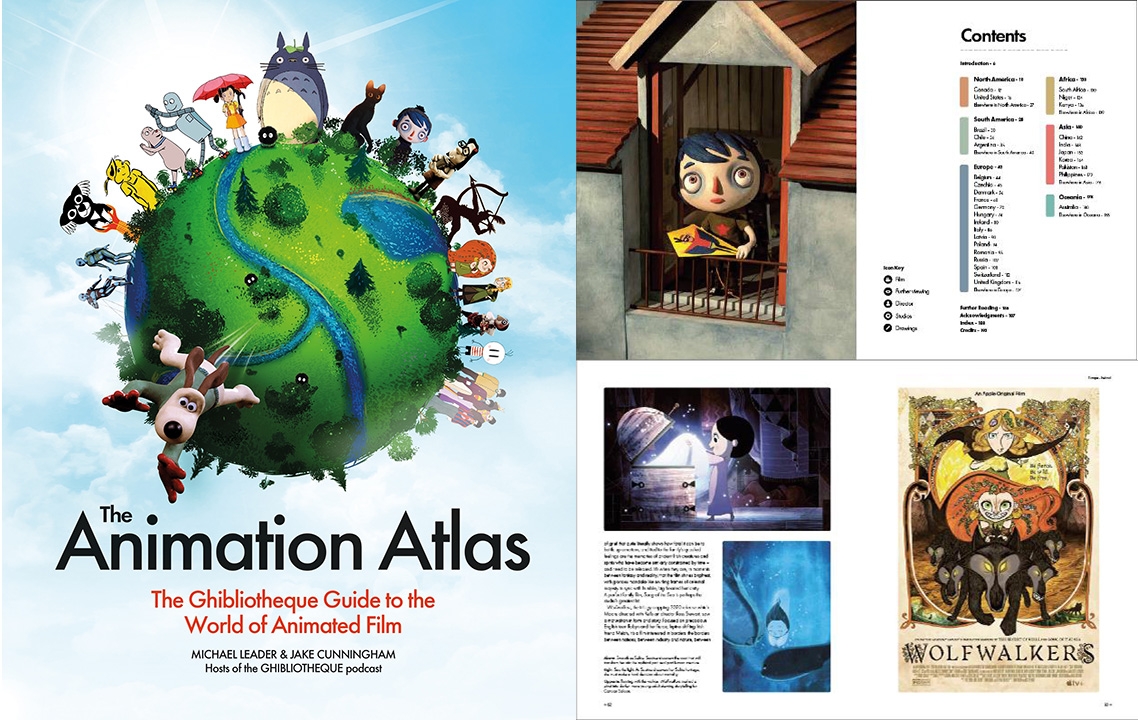
Available now, The Animation Atlas covers animation from Canada to New Zealand, from Flow to Mt. Head. Some readers will already know its British authors, Michael Leader and Jake Cunningham. In 2018, they began the Ghibliotheque podcast, which, as its name implies, was originally focused on the works of Studio Ghibli. However, it has since broadened its remit to cover animation studios around the world. Leader and Cunningham have also co-written five previous books, covering Ghibli, other anime and Korean cinema, before taking on world animation this time round.
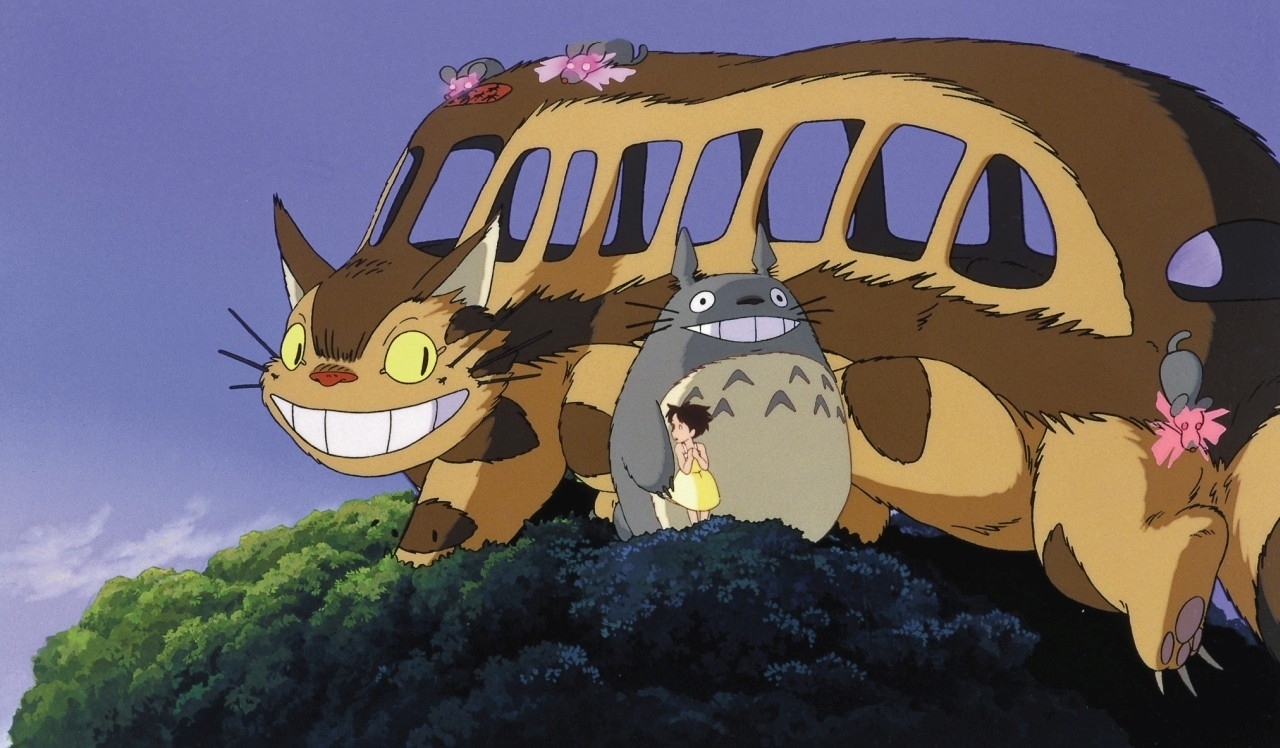
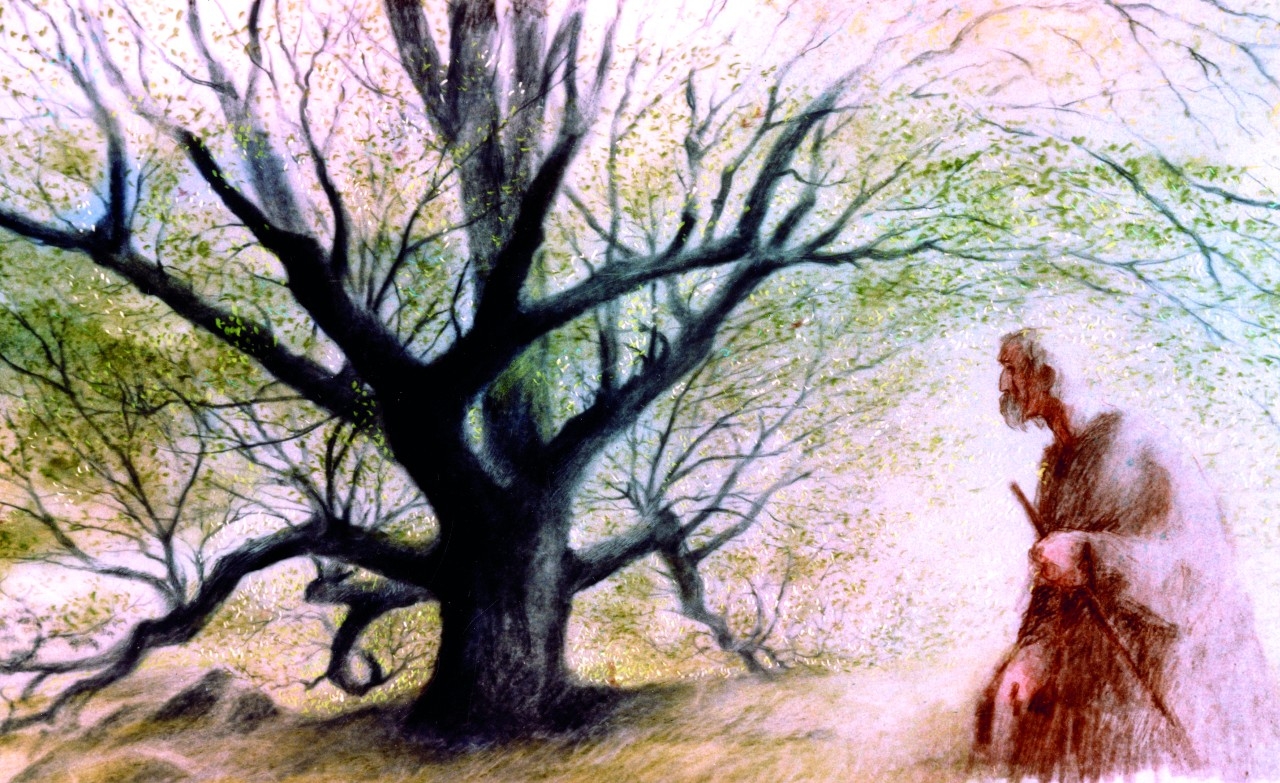
“Animation isn’t a genre, it’s a whole world,” the book declares. “Let’s explore it together,” The Animation Atlas covers popular favorites such as Snow White, Totoro, Robot Dreams and Wallace & Gromit, and foreign-language milestones including Fantastic Planet, Allegro non Troppo and The Tale of the Fox. Among the classic shorts covered are Canada’s The Man Who Planted Trees, Czechoslovakia’s The Hand and Russia’s Tale of Tales. The lesser-known features you’ll learn about include Belgium’s This Magnificent Cake!, Argentina’s lost El Apostol and Romania’s Marona’s Fantastic Tale.
I was able to quiz both Leader and Cunningham about their new book.
Andrew Osmond: Which pieces of animation do you remember making a deep impact on you while you were growing up – particularly films from outside the cultural mainstream? Do you remember particular moments which opened your eyes to animation’s potential?
 Michael Leader: I had a very mainstream upbringing, to be honest. But I think I was very fortunate that the “mainstream” animation of my childhood was still full of variety and showed off some of that “potential” you allude to. One of the first films I remember loving as a kid was Who Framed Roger Rabbit, which is not only a tribute to and crash-course in the Golden Age of American animation, but a wildly ambitious feat of filmmaking that is still dazzling to watch today.
It’s easy to take this for granted, but growing up through the 1990s, you were constantly bombarded with creative, innovative, wacky, weird animation as part of the daily diet. And they encompassed so many styles, too. Take stop-motion: we had the Nightmare Before Christmas on the big screen, and The Wrong Trousers at home, and those are still two of the peaks of the form.
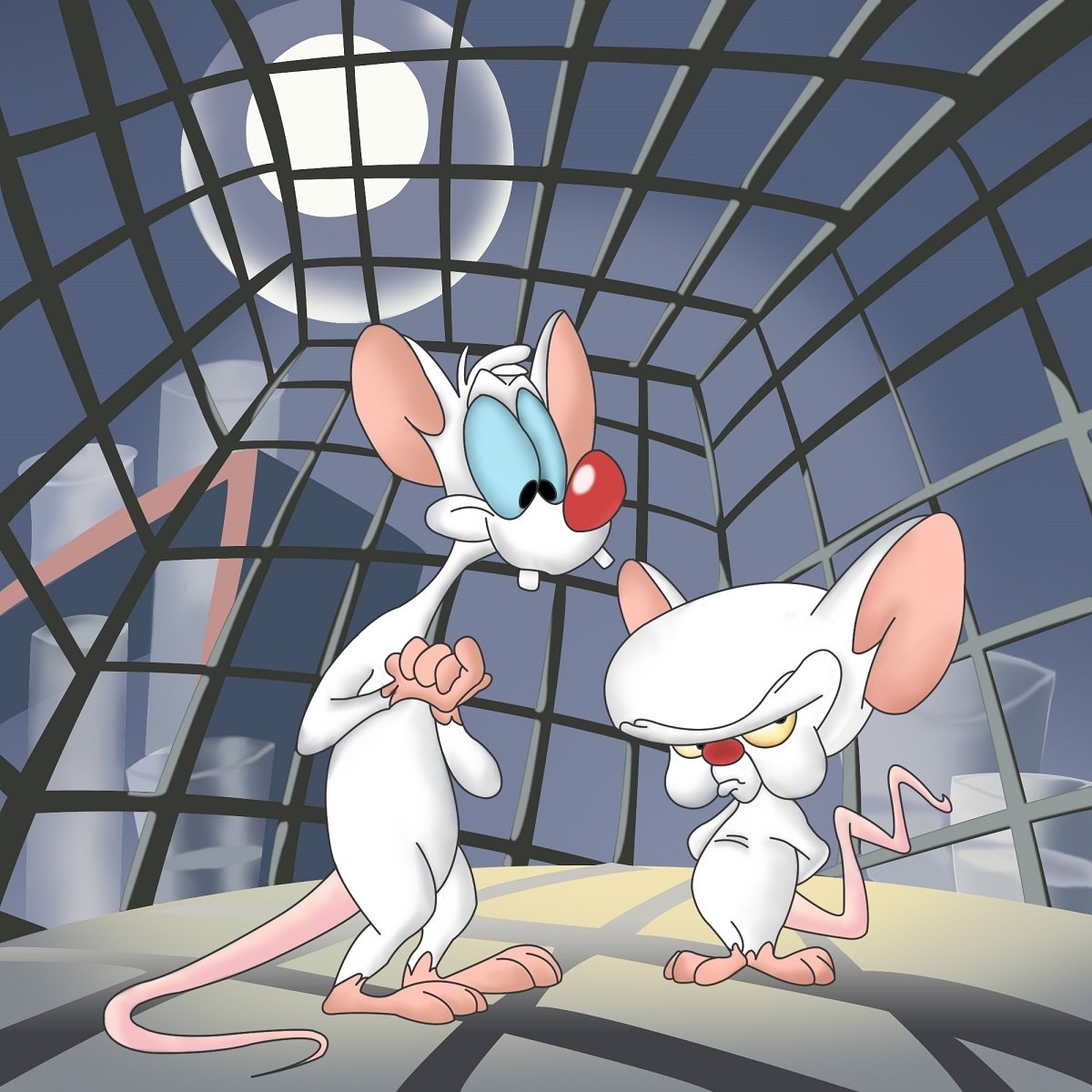
As a generation, our minds were blown by all sorts of series that bridged the gap between the exuberant energy of classic cartoons and the more edgy, offbeat ideas and imagery of European, Japanese and independent animators and artists: Animaniacs, Rocko’s Modern Life, Pinky and the Brain, The Ren & Stimpy Show, Dexter’s Laboratory, Batman: The Animated Series. And let’s not forget that the biggest TV show of the period, of any kind, was The Simpsons.
Jake Cunningham: I had a select handful of the Disney “vault” VHS classics that were on rotation, primarily Dumbo and The Jungle Book, but The Lion King and The Hunchback of Notre Dame were in the mix too. The journey of the Ghibliotheque podcast began with me filling in a key blind spot in animation, something which has continued in the seven years since we launched and has led to me to watch a vast amount of work that’s significantly outside the cultural mainstream of my animated youth.
AO: Early in the book, you provocatively suggest today’s Disney empire might be the true villain of the story of world animation. To pile on the provocation a bit, I’ve heard suggestions that anime might also be warping people’s ideas of animation today, leading youngsters worldwide to drawing a bog-standard version of “anime style.” Any thoughts?
ML: I think there are two different things at play here. Disney as an imperial entity crowded out the market and set a style and expectation for animation which, for better or worse, filmmakers around the globe have had to adhere to or rail against. And more broadly, the booms and busts of animation at the global box office for years have mainly depended on the fortunes of Disney or their collaborators, like Pixar.
What’s happening with anime is something that we’ve seen across the creative arts. It’s that point where a tradition, industry or creative community has risen to an iconic status, meaning that their differences and idiosyncrasies are sanded off in favor of an essential, digestible, marketable “style.” It happens in music, in video games, in comics, in all areas where human creativity meets the marketplace.
But to speak directly to your phrasing: youngsters will always start by copying their idols. They’ll try to play Stairway to Heaven or draw Spider-Man. What we need to do is take those influences on the page or the screen, and mix them with our own perspectives, world views, experiences, obsessions, to keep the cultural lifeblood flowing. Miyazaki described it as taking up the baton and then passing it on. That’s how art survives on a creative level. As an industry, that’s another story.
JC: I think kids will always mimic what’s popular. What’s interesting is what happens when artists who are interested in a “niche” become part of a mainstream production; like the anime-infused, template-changing style of something like Pixar’s Turning Red for instance. If a “bog-standard version of anime style” does become the norm, I’m excited for the emerging artists who’ll twist it.
AO: Regarding the Ghibliotheque podcast, the first time you moved beyond anime was into the work of Cartoon Saloon [The Breadwinner, Wolfwalkers]. Since then, you’ve looked especially closely at Henry Selick, Laika, Aardman and the animation of Richard Linklater. Do you think these studios and artists are particularly “close” to Ghibli, and how?
ML: It’s not really a matter of proximity to Ghibli, more that it’s a continuation of the Ghibliotheque project, which was about finding filmmakers and studios with core narratives, themes, and stylistic concerns. Individual films that are worth discussing, but an arc of a career as a whole that’s worth exploring in full. I feel that we have those recognizable filmmaker names in live-action – just look at the number of books about Wes Anderson that have been released this year! So we have been seeking those out in animation.
JC: One of our favorite things to do with our interview episodes of the show is to ask our guests who they think we should do a mini-series on next. We’ve had answers that you might expect, like Mamoru Oshii [Ghost in the Shell] or Naoko Yamada [A Silent Voice], but the ones that always excited us the most are the ones that are a real surprise and could move us into (sacrilegious I know) live-action, like Céline Sciamma or Yasujirō Ozu.
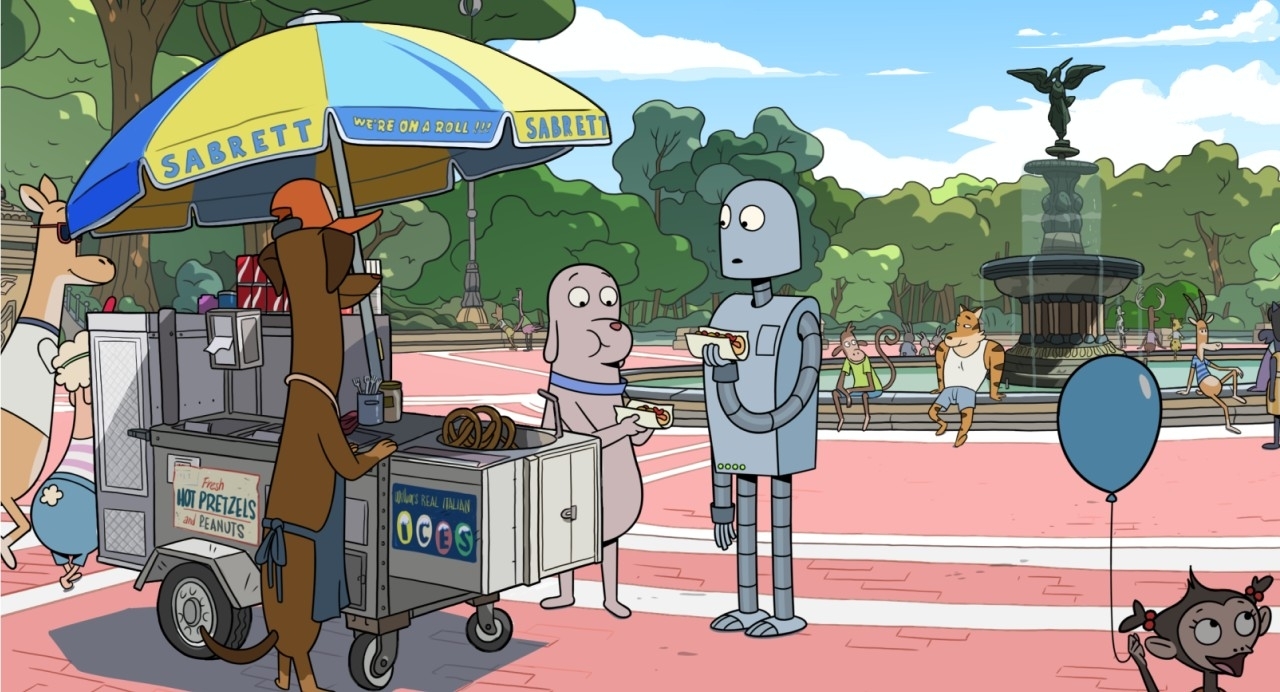
AO: For people who’ve started with Ghibli and then explored those other works – plus such wonderful recent films as Flow and Robot Dreams – do you think there’s a good “next step” beyond them, maybe to something a bit more challenging?
ML: I’m a curator at heart and it really depends on the person or people you’re thinking of. If we’re talking about younger viewers here, I’d perhaps try the films of Yuri Norstein (Hedgehog in the Fog, The Heron and the Crane), Lotte Reiniger (The Adventure of Prince Achmed), Ladislas Starevich (The Tale of the Fox), Michael Dudok de Wit (The Red Turtle, Father and Daughter) or Hermína Týrlová (The Glass Marble, The Snow Man). These films are enchanting and inventive, and they’re all over the map in geography, period and style.
AO: Given the recent awards success of Flow and Memoir of a Snail, do you think more diverse, international animation might be poised to break through into Anglophone culture? Over the years and decades, pundits have predicted it will happen, and then it never quite does…
ML: Wouldn’t that be amazing? The films are there… I think before that can happen, though, there needs to be a full reset of the whole cultural ecosystem, at least in the UK. It’s not just a case of animation “breaking through,” it’s about it first being seen as a fundamental part of film culture – not something specialist, or novel, or “just” for kids.
AO: This year’s American film KPop Demon Hunters has raised worries among some fans that “mainstream” US CG animation will just absorb popular elements from other cultures, such as Kpop and anime, and retain its dominance while keeping other animation marginal. Any comment on that?
ML: When has mainstream American animation not absorbed popular elements from other cultures? That topic is a book in its own right. The bigger question about KPop Demon Hunters for me, though, is whether it would have become such a sensation if it had been released in cinemas. The film may have captured the zeitgeist on Netflix but behind it all is a basic lack of confidence on Sony’s part that led to them selling it direct to streaming – and that doesn’t sound much like dominance to me.
AO: I cheered at your comment that you prefer the Russian cartoon of Winnie the Pooh [a trio of films by Feodor Khitruk] to Disney’s one. For readers who haven’t encountered the Russian version, can you say more about why it’s better?
ML. Oh, to put it simply: Walt’s Winnie is cuddly and twee and lovely, but the Soyuzmultfilm version, with its odd character designs, child’s-painting backgrounds and raspy-shrill voices, just has an irresistible strangeness to it.
AO: The book has an enthusiastic section on the 2023 Filipino film The Missing, which exploits “uncanny” animation to its artistic advantage [it’s available on Netflix]. For readers who’ve not read the book yet, can you sum up why it’s a film to see?
JC. I suppose this is what the chapter on the film is about! I won’t give away too much, but I think animation fans, and particularly any who work in animation, will find it interesting to see a film where the main character is a part of that industry and how formally and thematically that enriches the entire film.
AO: The book’s format clearly gave you many painful choices about which films would be highlighted, and which ones would be relegated to the round-ups. Which was the most painful choice for you?
ML: How long have you got? Summing up the whole of American animation in three films [Snow White and the Seven Dwarfs, The Nightmare Before Christmas and Toy Story] was a very hard task due to the sheer volume of films and filmmakers we could have focused on instead. And then there was the opposite problem with the UK, where there were many filmmakers that I feel are underappreciated that I wish we could have placed in the spotlight. But books like this come with dozens of difficult calls.
AO: Among the films in the book, are there any that you found impenetrable on first view, and then found yourself loving as you rewatched it? For me, I could never get through the Hungarian film Bubble Bath [aka Foam Bath]…
JC: I love Bubble Bath! And I loved it on first viewing too. I don’t think there’s anything that I found impenetrable, but there’s definitely films that I’ve grown to love more the more I’ve watched them. I think when I first saw Robot Dreams, for instance, I liked it as a visual-gag stuffed buddy tragi-comedy, but the more I watch it the more the easter-egg filled world drops away and the complexity and detail of that silently realized central relationship comes to the fore. I think it’s a pretty stunning achievement and can’t listen to “September” by Earth, Wind and Fire without welling up now because of it.
ML: Impenetrable is a big word, but Yuri Norstein’s Tale of Tales is one that is near impossible to fully grasp on a single viewing. But it’s such a beautiful, evocative, and beguiling poem of a film, you’ll gladly return to it time and again.
AO: Lastly, can I check how you and Jake divided up the writing duties this time?
ML: Oh, you should see our spreadsheet! Once we’ve filled that out and assigned all the chapters, that’s when the work really starts. In our earlier books, we divided each chapter into “context” and “review,” and I always handled the former. I still handle most of the “further viewing” boxes, but we now write the main chapters separately, so that involves bagging our favorites, fighting over others, and assigning some based on more practical, pragmatic, logistical concerns.
JC: I’m proud of a lot of the work that went into this book. But maybe I’m most proud of that spreadsheet.